The Chronic Illness Chronicles
What happens to families when health is stolen
Dedicated to the families. The ones carrying the diagnosis. The ones carrying the groceries. The ones carrying the fear. The ones carrying each other.
A Lyme Life · alymelife.com
I didn't set out to write about chronic illness. I set out to survive one.
For years, my family lived inside a house that illness had quietly turned into a triage unit. Three of us were sick. All five of us were changed. And in all the searching — for doctors, for treatments, for answers — I could never find the one thing I needed most: someone to say out loud what this was actually doing to us. Not to my body. To my family.
So I wrote it down. The guilt. The grief. The kids who grew up too fast. The marriage that bent but didn't break. The slow, unglamorous work of learning to live again.
These aren't clinical essays. They're the letters I wish someone had handed me. If you're in it right now, start wherever it hurts most — and know that I'm right here with you.
When You’re Ground Zero
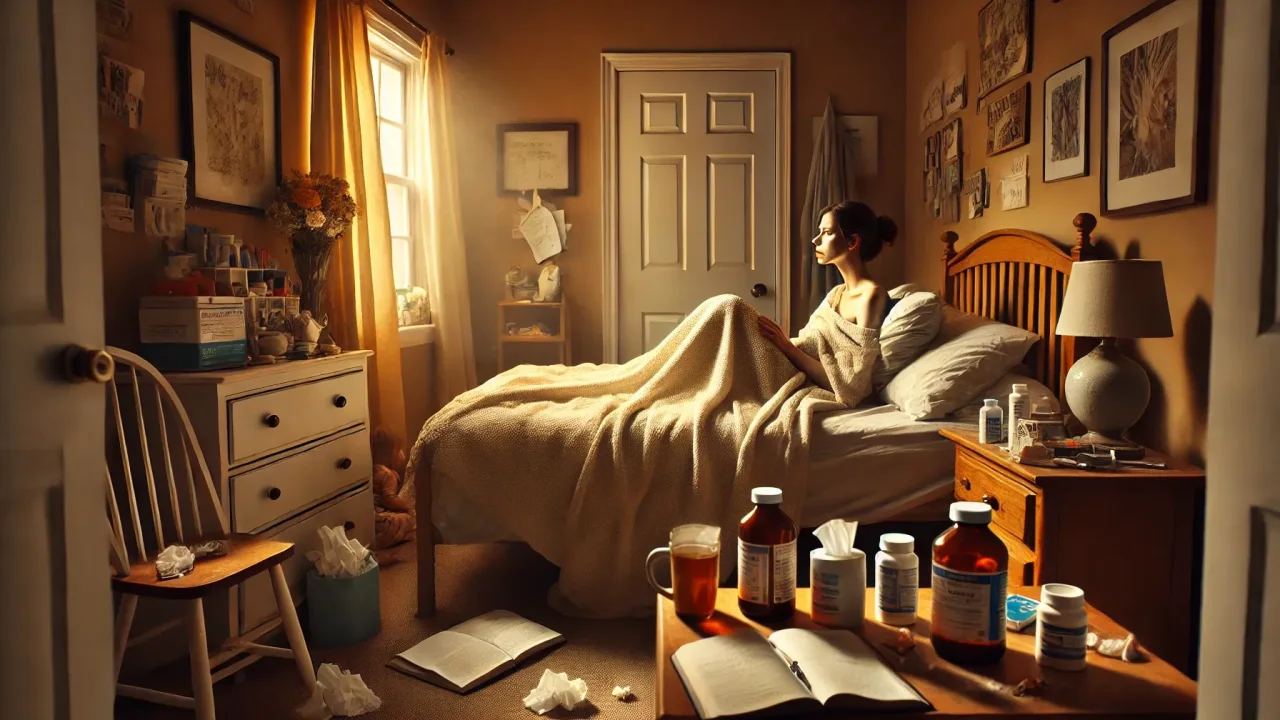
The one whose body broke down—but who still feels responsible for holding everyone else up.
The one who lies in bed, heart pounding, body aching, wondering: How do I care for my family when I can’t even care for myself?
The one who’s not just in pain—but buried in guilt.
Because chronic illness doesn’t just steal your energy. It steals your identity. Especially when you’re a mother. Especially when you’re the one everyone used to depend on.
When You’re the Heart of the House—and It’s Beating Wrong
There’s a particular kind of devastation that comes with not being able to show up for the people you love.
When you can’t make dinner—but your child still needs to eat. When you forget the school form, the birthday party, the spelling test—because your brain is mush and your pain is loud. When your spouse needs a partner, and you’re flat on your back again, feeling like a ghost of the woman they married.
You don’t stop wanting to give. You just can’t.
And that? That tears you apart more than any symptom.
The illness is cruel. But the guilt is its shadow—it follows you everywhere.
You start saying “I’m sorry” more than “I love you.” You start feeling like a burden in your own home. You start grieving yourself—while still trying to show up for everyone else.
No One Tells You How Lonely This Is
You look fine to the outside world, maybe. But inside, you're holding it all with shaking hands.
You cancel plans (again). You forget to text back (again). You spiral because you want to be reliable—but your body keeps pulling the rug out.
Even on the “good” days, you're afraid to hope. Because hope makes you plan. And chronic illness loves to laugh at plans.
The Unspoken Question: Am I Enough Anymore?
As a mother, you wonder if you’re ruining their childhood. As a partner, you wonder if they’re quietly resenting you. As a woman, you wonder if your worth was always tied to your doing—and now that you can’t do, are you still worthy?
I’ve been there.
Sick. Exhausted. Hollowed out by treatments. Watching my daughter fade, my husband change, and wondering if I was failing all of us by simply being sick.
I didn’t just feel broken. I felt like the reason everything else was broken, too.
But here’s what I had to learn—slowly, painfully, with help:
You are still enough.
Even on the days when you can’t get out of bed. Even when the laundry piles up, the meals come frozen, and the “good mom” stuff feels out of reach.
You are still the heart of your family—not because you’re doing it all, but because you keep loving through it.
The Center Doesn’t Have to Carry It All Alone
Here’s what no one said to me early on—so I’m saying it to you:
You don’t have to keep proving your worth by pushing through. You don’t have to earn rest. You don’t have to apologize for being in a body that’s still figuring out how to heal.
You can still be a good mother. A loving partner. A whole human.
You can redefine what care looks like. You can model resilience without martyrdom. You can teach your family that love isn’t about perfection—it’s about presence, even in pieces.
And you can ask for help. You’re allowed to need. You’re allowed to not be okay.
Because even at Ground Zero, you are not alone.
When One Person Is Sick, the Whole House Feels It
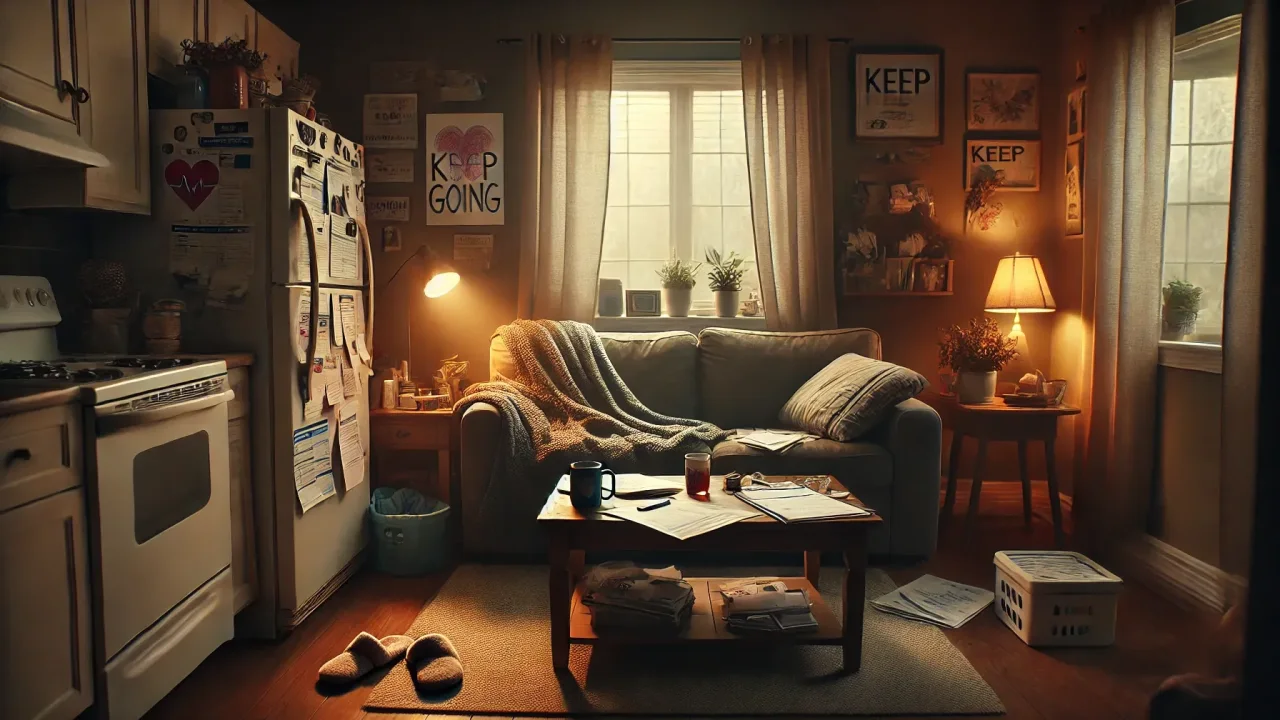
I used to think Lyme disease was something we could fight like a bad flu. Treat it, rest, recover. Back to normal.
Spoiler alert: there is no "normal" after chronic illness. There’s a new normal, sure—but it rarely resembles the old one. And it’s never just about one person.
In our case, three of us were sick—me, my husband, and our middle daughter. But even in families where only one person has a diagnosis, everyone gets touched by it. The physical symptoms may live in one body. The ripple effects? They hit everybody.
Illness Doesn’t Live in a Vacuum. It Moves Into the Whole House.
It reshapes roles. The strong one suddenly needs help. The helper burns out. The kid becomes the caretaker. The parent becomes a stranger.
One partner is drowning in symptoms. The other is drowning in logistics. Who’s handling the insurance appeal? Who’s Googling obscure treatments at 3 a.m.? Who’s watching the other kids while someone’s in bed again?
We spent years like that. Trying to function inside a house that had quietly transformed into a triage unit. Appointments took over the calendar. Laughter disappeared. Fear and fatigue became our native language.
There was a day—I remember it vividly—when my husband asked me, "Do you think we’ll ever talk about anything besides illness again?"
That question haunted me. Not just because of what it said about our reality—but because I didn’t have an answer.
The Diagnosis Might Be Singular. The Impact Never Is.
Chronic illness creates invisible fractures—ones that don’t show up on MRI scans. They show up in the way your teenager stops inviting friends over. In the way your spouse starts sleeping on the couch, not because you're fighting, but because one of you twitches in pain all night and the other just desperately needs sleep.
It shows up in your bank account. In your sex life. In your friendships that quietly vanish. It shows up in how the world gets smaller, because it’s just too hard to leave the house.
And here’s the kicker: most of this happens without anyone else seeing it.
You start to wonder if you're just imagining how heavy it’s gotten.
You're not.
Healing Is Never Just Physical
One of the biggest lies we’re sold is that treatment is the finish line. Here’s what actually happens: if you’re lucky enough to find something that helps (and that's a big if), the real work begins after that. Rebuilding relationships, repairing trust, redefining connection—all while still managing lingering symptoms and PTSD from the medical rollercoaster you’ve been on.
Whole-body hyperthermia helped my family turn a corner physically. But it didn’t stitch us back together emotionally. That took time. Therapy. Honest, messy conversations. And a full-body reckoning with what we had all lost—and what we still had to fight for.
Because love doesn’t cure chronic illness. But it does give you a reason to keep showing up.
If You’re Living This—You're Not Alone
Whether you're the one in pain or the one pouring from an empty cup every day to care for someone who is… I see you.
And if you're holding your family together with sheer willpower and duct tape while navigating a system that’s underfunded, misunderstood, and allergic to complexity—yeah, I really see you.
You’re not imagining how hard this is.
But you’re also not doing it for nothing.
Every small win counts. Every moment of connection that illness didn’t steal is sacred. Every time you advocate, adjust, adapt—that matters.
So here’s what I want you to know: You are doing holy work. Even if no one gives you a trophy for it. Especially if no one gives you a trophy for it.
What Chronic Illness Steals From Kids
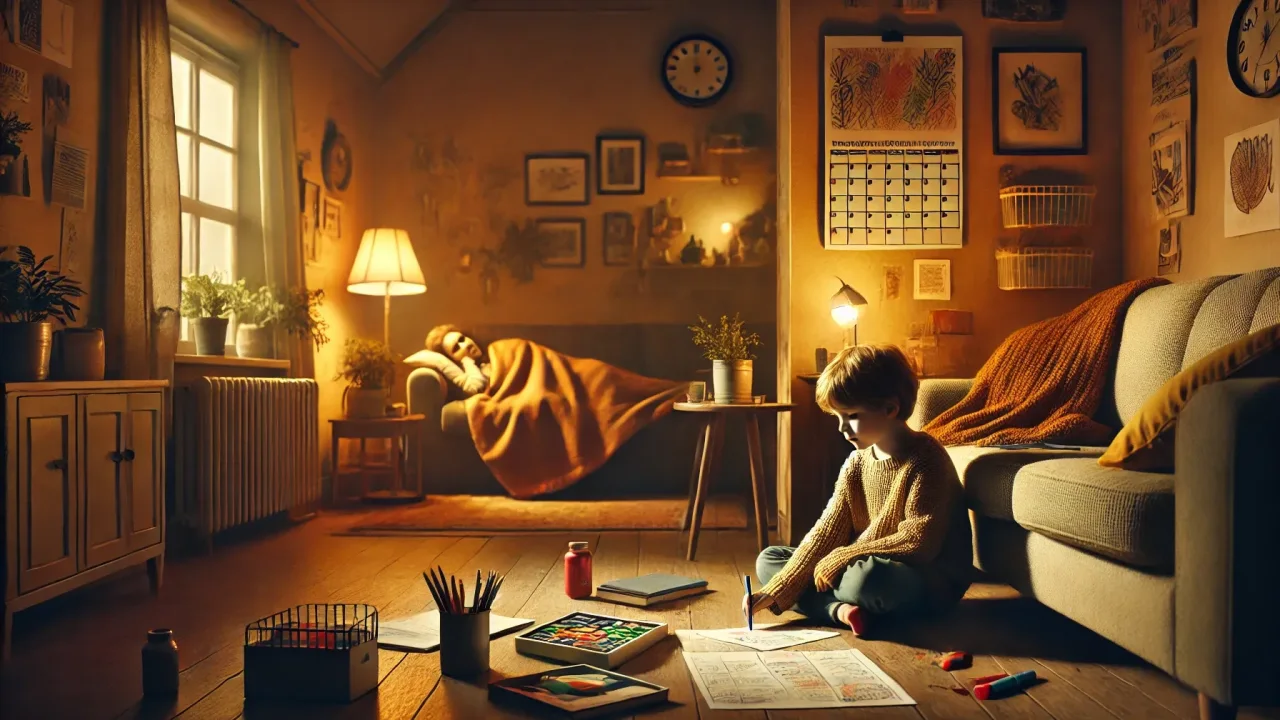
Kids are supposed to be resilient. That’s what people say.
But here’s what I’ve learned after watching chronic illness knock down every adult in our house: Resilient doesn’t mean unaffected. Resilient doesn’t mean untouched. And it sure as hell doesn’t mean unaware.
My daughter was 9 when Lyme disease swallowed our lives whole. She was also sick—but not in the “cough and fever” kind of way. She had the kind of illness that crept into her brain, stole her laughter, and left her confused and terrified inside her own body. That kind of illness is cruel. But here’s the twist:
Even if she hadn’t been the one with symptoms, it still would’ve changed her.
Because when anyone in the house is chronically ill, kids notice.
They notice missed birthday parties and whispered conversations behind closed doors. They notice when dinner gets skipped and the mood in the room goes flat. They notice when Mom stops singing in the kitchen, or Dad starts forgetting things, or the family vacation turns into a medical trip.
They may not have the language for it. But trust me: they feel the shift.
Kids Are the Quiet Caregivers
Most people don't talk about them.
We rally around patients. We acknowledge parents-turned-caregivers. But we rarely talk about the child who becomes the “easy one” because their sibling needs more. Or the teenager who stops asking for rides because Mom’s in bed again. Or the seven-year-old who draws pictures of IVs because that’s what they see every week.
Kids in chronically ill families often become silent shape-shifters. They absorb. They adjust. They step back. And sometimes, they start believing that their needs are too much. That their job is to stay strong, stay quiet, stay low-maintenance.
It’s not because anyone told them that. It’s because they see everything—and they adapt.
When Illness Reshapes Childhood
Our daughter missed dances and slumber parties. She missed her own laugh. She missed us—not just as caretakers, but as people.
And as we started healing physically (after treatments like whole-body hyperthermia), we realized just how much emotional debris had built up underneath it all.
We had to re-learn how to be a family. We had to help her unlearn what illness had taught her: that she was a burden, that joy wasn’t safe, that there was no room for her pain.
I wish we had done it sooner.
Because the truth is, kids don’t need us to be perfect. They just need to be seen. Heard. Considered.
Even in the thick of it. Especially in the thick of it.
If You're in It Now—Here's What I Want You to Know
If you're in a season where one (or more) family members are sick and the kids are “handling it,” check in anyway. Ask twice. Watch the art they make. Listen to the silences.
Don’t just let them be resilient. Let them be real.
Let them cry. Let them be mad. Let them say what hurts—even if it's "I hate this" or "I'm scared." Because saying it out loud helps it lose power.
And maybe most importantly: Let them still be kids. Even in a house that feels like a hospital. Let them laugh. Let them be loud. Let them be selfish, sometimes.
They’re not just witnesses to the illness. They’re survivors of it, too.
Your turn: If you grew up around chronic illness, what do you wish someone had seen? And if you're raising kids through it now—how are you helping them carry it?
Take Two More Steps and let’s keep this conversation going.
What Happens to the Ones Who Stay
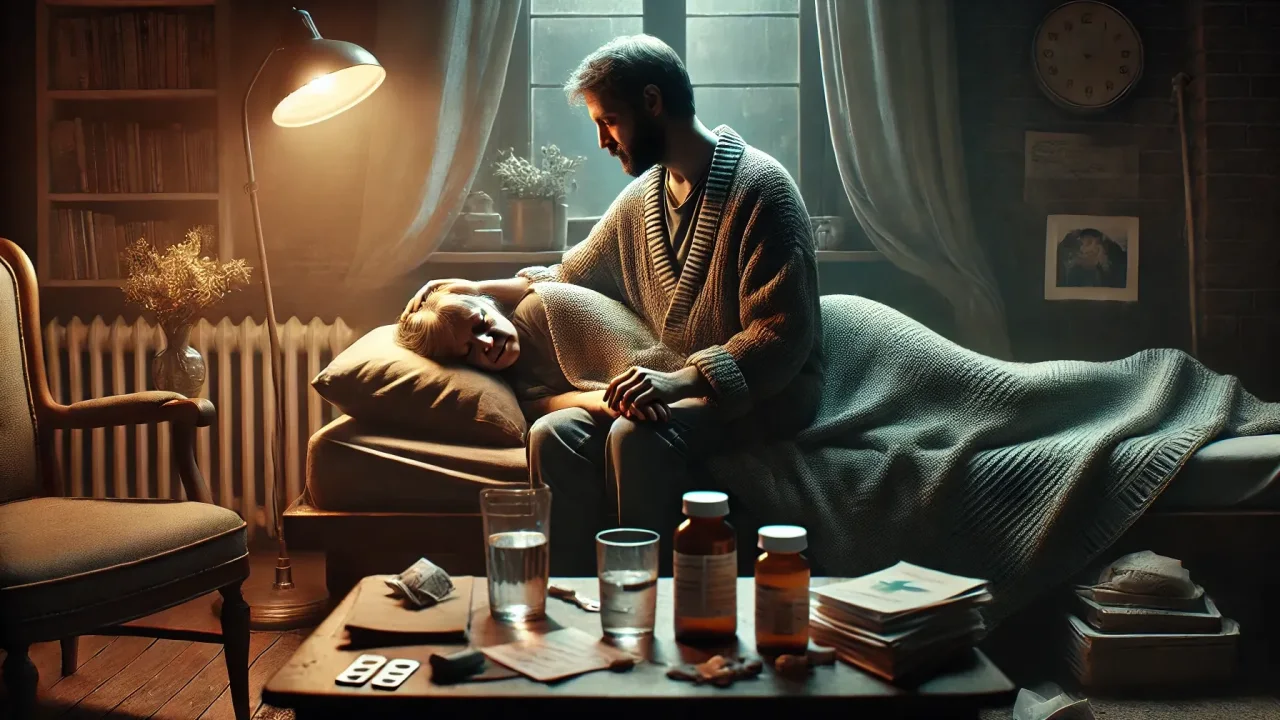
Let’s talk about the companions. The partners. The spouses. The ones who said “in sickness and in health” before they had any idea what that could actually mean.
This is Part 3 of a series on what chronic illness really does to families. Part 1 was about the family system that illness quietly invades. Part 2 was about children—the invisible impact on young hearts. Now we’re talking about the person beside you—the one who doesn’t always get the diagnosis, but absolutely gets the fallout.
Because chronic illness doesn’t just affect the body. It rearranges intimacy. Shifts roles. Breaks and builds trust. And sometimes, it threatens to burn the whole relationship to the ground.
When Love Becomes Logistics
Here’s a thing no one tells you about long-term illness: It turns the most romantic love stories into full-blown project management systems.
One day you’re planning weekend getaways. The next, you’re planning infusion schedules and researching treatment side effects. One of you becomes the patient. The other becomes the caregiver. And somewhere in between, the relationship itself goes quiet.
I’ve been on both sides. I’ve needed care. I’ve given it. And I’ve watched the person I love most slowly vanish inside an illness we didn’t understand, couldn’t predict, and barely survived.
At our worst, we weren’t fighting the disease—we were fighting each other. Because chronic illness doesn’t just test your patience. It tests your identity. Who am I, if I can’t help you? Who am I, if I’m always the one hurting you?
The Grief No One Talks About
There’s a grief that comes with watching your person fade.
Grief for the version of them that used to laugh easily. Grief for the connection that used to feel effortless. Grief for the sex, the spontaneity, the simplicity.
And it’s a weird kind of grief—because they’re still right there. Breathing. Sleeping beside you. Maybe even trying to smile.
But it’s not the same.
And if you’ve ever felt guilty for mourning that—don’t. You’re not ungrateful. You’re not weak. You’re human. And you’re allowed to want your person back.
What It Takes to Stay
Here’s the truth: some people don’t. They leave. They tap out. They self-preserve. And while I won’t judge anyone’s path—I will fiercely honor the ones who stay.
The ones who don’t get the sympathy, but carry just as much weight. The ones who become advocates, nurses, chauffeurs, breadwinners, emotional shock absorbers—and still try to remember what date night used to feel like.
Staying isn’t just brave. It’s holy. It’s harrowing. It’s heroic. And sometimes, it’s the hardest thing you’ll ever do.
If You’re in It Now—You’re Not Invisible
If you are the partner of someone with chronic illness: You matter. Your pain matters. Your joy matters. You are not just support staff. You are not just “doing what you signed up for.” You are grieving, adapting, loving, surviving.
And you deserve space to say, This is hard. Because it is.
You also deserve support, respite, and tenderness. Love should not disappear just because bodies fail or roles change. But it does take work. Therapy. Humor. Deep patience. And sometimes, a damn good cry in the car.
What Now? How to Actually Live With It
The Chronic Illness Chronicles – Final Chapter
So, we’ve talked about it. The person with the illness. The kids. The partner. The whole damn house that feels like it’s caving in.
Now comes the question everyone thinks but rarely says out loud:
What now? What the hell do we do with this life we didn’t ask for? How do we survive it? And if we’re lucky… how do we live inside it, not just endure it?
Let me be honest: there’s no magical finish line. No perfect protocol. No “just do this and your family will thrive through chronic illness!” checklist.
But there are things. Tiny, gritty, hard-won things that can make this life 1% better. And some days? That 1% is everything.
Start Here: Survival Is Noble
If you're reading this, you're probably already doing the hard stuff. Waking up in a body that doesn't cooperate. Caring for someone who is barely functioning. Making decisions without good options. Holding your family together with medication schedules, casseroles, and a sense of humor that’s 80% sarcasm, 20% feral hope.
So first, let’s name it: Survival is not failure. Survival is strength. And if all you did today was endure it? That’s enough.
But let’s say you’re ready for just a little more. Something active. Something that feels like forward movement, even if it’s messy.
Here are a few places to begin.
1. Build One Tiny System That Saves Energy
We spend so much time in reaction mode—doctor calls, symptom spikes, emotional crashes—that we forget to create systems.
Start ridiculously small. ➡ Put all your medical records in one shared folder. ➡ Set a repeating calendar reminder for prescriptions. ➡ Create a one-page summary of symptoms + diagnoses for new providers. ➡ Print a freaking checklist for packing meds if you travel.
Systems don’t solve the problem—but they make you spend less life chasing it.
2. Outsource Guilt. Immediately.
Guilt is a liar. And it’s heavy. And it doesn’t help.
You are not lazy. You are not weak. You are not ruining your family.
You are navigating complexity with no map.
So ask yourself this: Would I expect this much from someone I love?
If not—stop expecting it from yourself.
3. Name the Season You’re In
Are you in survival mode? Stabilization? Slow rebuilding?
It helps to name the phase. Not to label yourself—but to align your expectations.
Here are four emotional/logical “seasons” I’ve lived through (sometimes all in one month):
Survival – You’re just trying to get through the next hour. Symptom flares, burnout, or crisis mode. Everything is triage.
Stabilization – You’re starting to tread water. Things are still hard, but they’re not changing every five minutes. Some structure is possible.
Rebuilding – You’ve got a little capacity to plan. You're finding treatments that help. There's space for reflection, therapy, reconnection.
New Normal – You know your limits and your tools. Life isn’t “back”—but it’s yours again. You adapt without constant panic. You even hope.
Naming the season lets you give yourself grace—and communicate clearly with the people around you.
4. Use Your “Bandwidth Budget” Like It Matters (Because It Does)
Imagine you have $10 of energy a day. That’s it.
Appointments cost $4. Cooking costs $2. Small talk with in-laws costs $1.50 (and requires recovery). Netflix and ice cream? $1, well spent.
Once it’s gone, it’s gone.
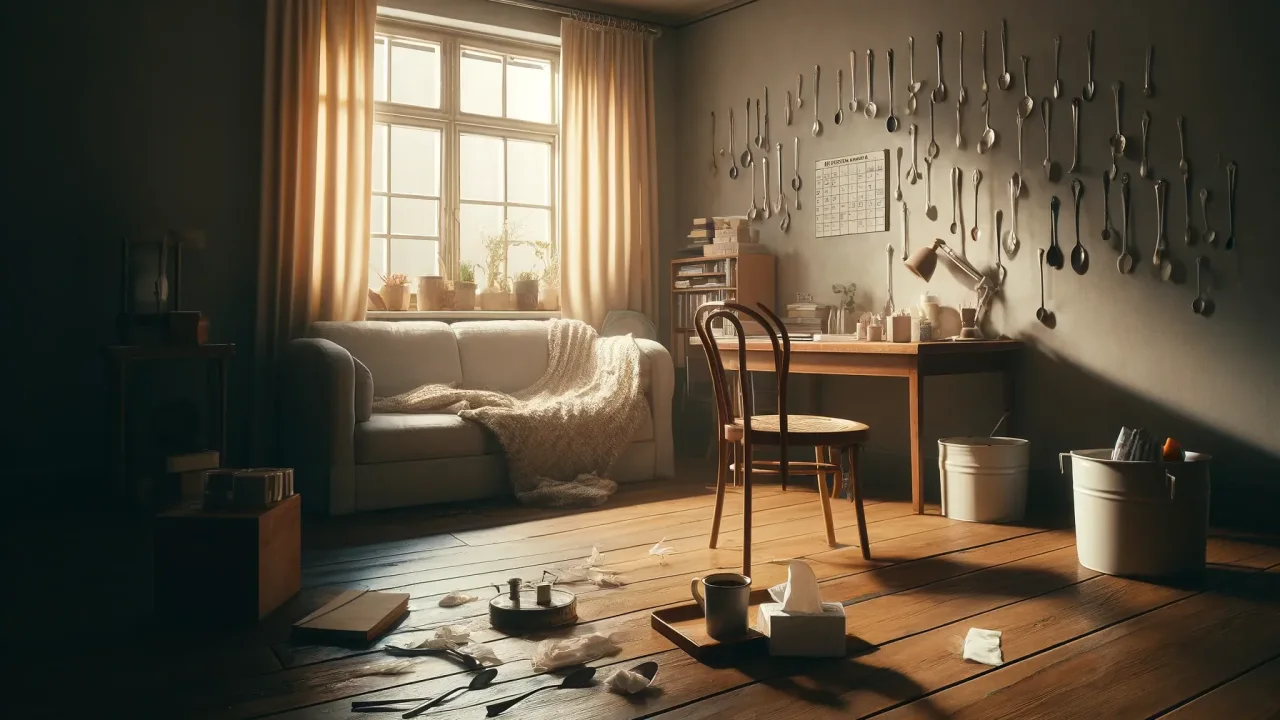
This is also known as the Spoon Theory, developed by Christine Miserandino. She described explaining chronic illness to a friend using a handful of spoons to represent limited energy. Every task costs a spoon. When you run out—you’re done. Simple, brilliant, and deeply relatable.
So ask yourself:
- What can be delayed?
- What can be delegated?
- What can be deleted?
Spend your energy on what actually moves the needle. Or brings joy. Or at least doesn’t make you want to scream.
5. Let People In—But Give Them a Role
“Let me know if you need anything” isn’t a plan.
But “Can you pick up a prescription on Tuesday?” “Could you watch the kids for 90 minutes while I nap?” “Will you send memes when I’m spiraling?”
That’s a role.
People want to help—but they need a job description. Be brave enough to give them one.
Here are some that have worked in our house:
The Grocery Runner – “Can you grab a few basics on your next trip and drop them at the door?”
The Medical Translator – “Can I read this lab result to you and get your take before I spiral?”
The Herx Text Friend – “If I text ‘Herxing bad,’ can you reply with something funny or just say, ‘You're doing great’?”
The Calendar Checker – “Once a month, can we spend 10 minutes making sure I didn’t miss any appointments?”
The Errand Buddy – “Can you drive me to [appointment/grocery/whatever] and just be there in case I crash?”
The Kid Distraction Crew – “Can you take the kids for an hour on Sunday so I can nap/cry/float in silence?”
The Advocacy Buddy – “Will you help me prep questions for my next appointment? I can’t think straight when I’m in there.”
The Spoon Guardian – “If you see me doing too much, remind me that rest is productive too.”
These don’t have to be heroic. They just need to be real.
Because the person who texts “Thinking of you” is sweet. But the one who shows up with Epsom salts and your favorite soup? That’s the one who gets a key to the city.
Give people a role. Let them in. Not because you’re weak—but because we literally weren’t built to survive this alone.
6. Find One Tiny Joy Ritual
Chronic illness steals joy with surgical precision.
So take it back—intentionally, even if it’s microscopic.
Spend your energy on what actually moves the needle. Or brings joy. Or at least doesn’t make you want to scream.
- Tea in your favorite mug.
- A 3-minute dance party with your kid.
- An episode of trash TV with zero shame.
- Sitting in the sun.
- A deep breath. A weird meme. Anything.
Joy isn’t frivolous. It’s necessary.
So... What Now?
Now, you keep going.
But maybe with less guilt. Maybe with one new boundary. Maybe with a list of what actually helps when you’re not okay.
You remind yourself that this life still matters—even if it’s harder, slower, more complicated than the one you planned.
You give yourself permission to be a work in progress. To suck at this some days. To be brilliant at it others. To ask for help. To laugh anyway. To live—not just exist.
Because yes, this is hard. But you’re still here. And that matters.
Let’s wrap this with one question: What have you done—big or small—that made this 1% easier for you or your family? Drop it in the comments. You might be someone’s lifeline today.
This concludes The Chronic Illness Chronicles—but the conversation is far from over.
Why I created A Lyme Life
People assume “A Lyme Life” is about fighting Lyme. It isn't.
My old life — the one I keep catching myself grieving — is gone. Lyme took it. And for a long time I waited to get it back, like it was in a drawer somewhere and I just had to find the right key.
Eventually I understood: there is no old life to return to. There's only the life in front of me, and the choice of whether to actually live it.
That's what A Lyme Life means. It's not about beating the illness. It's about learning to live with what it's leaving behind — and helping other families do the same, so they don't have to figure it out as alone as I did.
Because chronic illness may change a life. But it does not get the final word.
Help me write the rest
Here's something I keep coming back to: I don't think this story is only mine to tell.
So I want to try something. As these Chronicles grow — maybe one day into a book — I'd love for you to help write it. Not by buying something. By telling me what I got right, what I missed, and what your family is living through that no one else is saying out loud.
If a chapter put words to something you've never been able to explain, tell me. If it missed you entirely, tell me that too. Your story might be the exact thing that reaches the next exhausted person at 2 a.m.
With love, and two more steps,
— Christina
It's not about fighting the illness. It's about learning how to live with what it is leaving behind.