
What Happens to the Ones Who Stay
The partners. The spouses. The ones who said 'in sickness and in health' before they had any idea what that could actually mean.
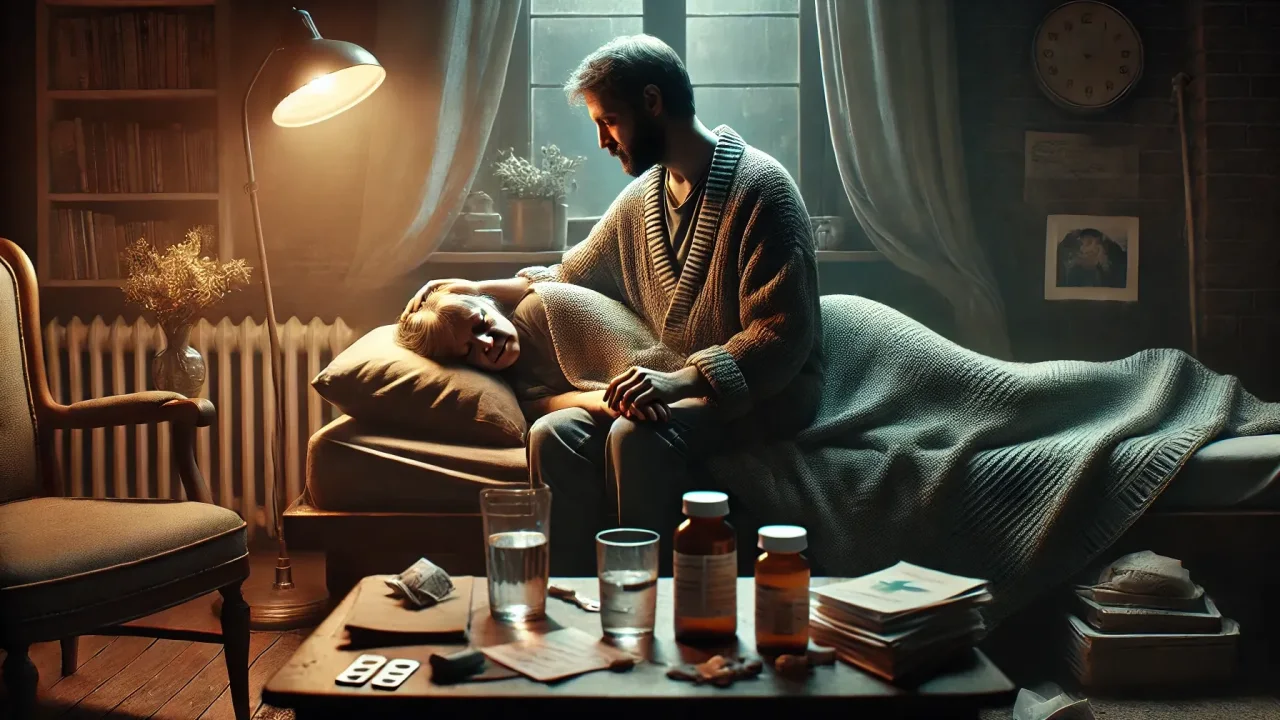
Let’s talk about the companions. The partners. The spouses. The ones who said “in sickness and in health” before they had any idea what that could actually mean.
This is Part 3 of a series on what chronic illness really does to families. Part 1 was about the family system that illness quietly invades. Part 2 was about children—the invisible impact on young hearts. Now we’re talking about the person beside you—the one who doesn’t always get the diagnosis, but absolutely gets the fallout.
Because chronic illness doesn’t just affect the body. It rearranges intimacy. Shifts roles. Breaks and builds trust. And sometimes, it threatens to burn the whole relationship to the ground.
When Love Becomes Logistics
Here’s a thing no one tells you about long-term illness: It turns the most romantic love stories into full-blown project management systems.
One day you’re planning weekend getaways. The next, you’re planning infusion schedules and researching treatment side effects. One of you becomes the patient. The other becomes the caregiver. And somewhere in between, the relationship itself goes quiet.
I’ve been on both sides. I’ve needed care. I’ve given it. And I’ve watched the person I love most slowly vanish inside an illness we didn’t understand, couldn’t predict, and barely survived.
At our worst, we weren’t fighting the disease—we were fighting each other. Because chronic illness doesn’t just test your patience. It tests your identity. Who am I, if I can’t help you? Who am I, if I’m always the one hurting you?
The Grief No One Talks About
There’s a grief that comes with watching your person fade.
Grief for the version of them that used to laugh easily. Grief for the connection that used to feel effortless. Grief for the sex, the spontaneity, the simplicity.
And it’s a weird kind of grief—because they’re still right there. Breathing. Sleeping beside you. Maybe even trying to smile.
But it’s not the same.
And if you’ve ever felt guilty for mourning that—don’t. You’re not ungrateful. You’re not weak. You’re human. And you’re allowed to want your person back.
What It Takes to Stay
Here’s the truth: some people don’t. They leave. They tap out. They self-preserve. And while I won’t judge anyone’s path—I will fiercely honor the ones who stay.
The ones who don’t get the sympathy, but carry just as much weight. The ones who become advocates, nurses, chauffeurs, breadwinners, emotional shock absorbers—and still try to remember what date night used to feel like.
Staying isn’t just brave. It’s holy. It’s harrowing. It’s heroic. And sometimes, it’s the hardest thing you’ll ever do.
If You’re in It Now—You’re Not Invisible
If you are the partner of someone with chronic illness: You matter. Your pain matters. Your joy matters. You are not just support staff. You are not just “doing what you signed up for.” You are grieving, adapting, loving, surviving.
And you deserve space to say, This is hard. Because it is.
You also deserve support, respite, and tenderness. Love should not disappear just because bodies fail or roles change. But it does take work. Therapy. Humor. Deep patience. And sometimes, a damn good cry in the car.