
When One Person Is Sick, the Whole House Feels It
Chronic illness doesn't knock politely. It kicks the door in — and it doesn't just go after the person with the diagnosis. It rearranges everyone.
I used to think Lyme disease was something we could fight like a bad flu. Treat it, rest, recover. Back to normal.
Spoiler alert: there is no "normal" after chronic illness. There’s a new normal, sure—but it rarely resembles the old one. And it’s never just about one person.
In our case, three of us were sick—me, my husband, and our middle daughter. But even in families where only one person has a diagnosis, everyone gets touched by it. The physical symptoms may live in one body. The ripple effects? They hit everybody.
Illness Doesn’t Live in a Vacuum. It Moves Into the Whole House.
It reshapes roles. The strong one suddenly needs help. The helper burns out. The kid becomes the caretaker. The parent becomes a stranger.
One partner is drowning in symptoms. The other is drowning in logistics. Who’s handling the insurance appeal? Who’s Googling obscure treatments at 3 a.m.? Who’s watching the other kids while someone’s in bed again?
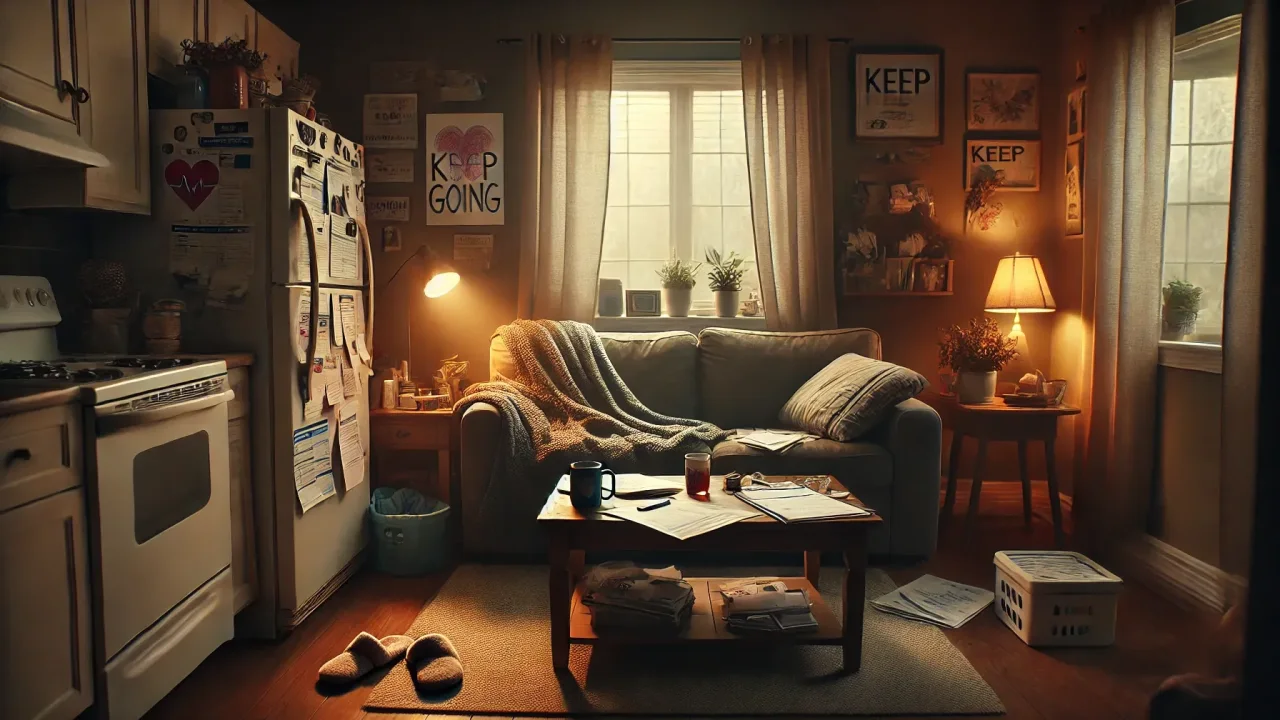
We spent years like that. Trying to function inside a house that had quietly transformed into a triage unit. Appointments took over the calendar. Laughter disappeared. Fear and fatigue became our native language.
There was a day—I remember it vividly—when my husband asked me, "Do you think we’ll ever talk about anything besides illness again?"
That question haunted me. Not just because of what it said about our reality—but because I didn’t have an answer.
The Diagnosis Might Be Singular. The Impact Never Is.
Chronic illness creates invisible fractures—ones that don’t show up on MRI scans. They show up in the way your teenager stops inviting friends over. In the way your spouse starts sleeping on the couch, not because you're fighting, but because one of you twitches in pain all night and the other just desperately needs sleep.
It shows up in your bank account. In your sex life. In your friendships that quietly vanish. It shows up in how the world gets smaller, because it’s just too hard to leave the house.
And here’s the kicker: most of this happens without anyone else seeing it.
You start to wonder if you're just imagining how heavy it’s gotten.
You're not.
Healing Is Never Just Physical
One of the biggest lies we’re sold is that treatment is the finish line. Here’s what actually happens: if you’re lucky enough to find something that helps (and that's a big if), the real work begins after that. Rebuilding relationships, repairing trust, redefining connection—all while still managing lingering symptoms and PTSD from the medical rollercoaster you’ve been on.
Whole-body hyperthermia helped my family turn a corner physically. But it didn’t stitch us back together emotionally. That took time. Therapy. Honest, messy conversations. And a full-body reckoning with what we had all lost—and what we still had to fight for.
Because love doesn’t cure chronic illness. But it does give you a reason to keep showing up.
If You’re Living This—You're Not Alone
Whether you're the one in pain or the one pouring from an empty cup every day to care for someone who is… I see you.
And if you're holding your family together with sheer willpower and duct tape while navigating a system that’s underfunded, misunderstood, and allergic to complexity—yeah, I really see you.
You’re not imagining how hard this is.
But you’re also not doing it for nothing.
Every small win counts. Every moment of connection that illness didn’t steal is sacred. Every time you advocate, adjust, adapt—that matters.
So here’s what I want you to know: You are doing holy work. Even if no one gives you a trophy for it. Especially if no one gives you a trophy for it.