How to Pay for Lyme Treatment When Insurance Won't
One of the cruelest parts of chronic Lyme: the treatment that could give you your life back often isn't covered — and you're too sick to fight for it. Here's a practical, honest guide to funding, grants, fundraising, and the real ways families make it happen.
Let's name the thing nobody wants to say out loud: chronic Lyme is expensive, and the system often won't help you pay for what actually works. I've sat in that exact panic — the treatment is right there, and the money isn't. It is one of the most demoralizing parts of this whole journey.
So this page is pure practicality. No false promises, just the real levers families pull to afford care — usually by stacking several of them together. Take what applies to you.
Watch: Lyme Treatment Funding for Your Child
If you are fighting to fund a sick child’s treatment, watch this — practical help from one parent to another.
If the video does not load, watch it on YouTube.
Start here: think "stack," not "silver bullet"
The single most useful reframe: almost no one funds treatment from one source. The families who make it happen usually combine savings + fundraising + a grant + maybe financing + partial reimbursement. Each piece covers a slice. So don't wait for one perfect solution — build a stack.
Quick answer
Does insurance cover Lyme disease treatment?
Standard, early Lyme treatment is often covered, but insurance frequently does not cover longer-term chronic Lyme care, treatment abroad, or many integrative and advanced therapies, which are commonly paid out of pocket. That said, some costs can sometimes be partially reimbursed, and The Lyme Specialist works with partners who can help recover part of your costs through insurance; they do not recover 100 percent, and the partner's fee is a percentage of what is successfully recovered. Always verify your specific coverage with your insurer.
Key Takeaways
- The treatment that could give your life back often isn’t covered — and you’re too sick to fight for it.
- Think “stack,” not “silver bullet” — families combine several sources.
- Get every insurance dollar you can, even for out-of-network reimbursement.
- Grants, medical fundraising, and financing each cover part of the gap.
- Extra help exists when it’s your child — and you don’t have to figure it out alone.
1. Insurance & reimbursement — get every dollar you can
Don't assume "not covered" means "nothing back"
Standard early Lyme treatment is often covered; chronic care, treatment abroad, and integrative therapies frequently aren't. But — some costs can sometimes be partially reimbursed, and it's worth pursuing rather than assuming zero.
Importantly, The Lyme Specialist works with partners who can help recover part of your costs through insurance. They don't recover 100%, and the partner's fee is a percentage of whatever is successfully recovered — but for many families, getting some of a large bill back is meaningful. Always confirm your own coverage and documentation needs with your insurer, and keep every receipt and record.
2. Grants & financial-assistance programs
Nonprofit Lyme grants exist
Several Lyme-focused nonprofits offer treatment grants or financial assistance, sometimes prioritizing children, veterans, or lower-income patients. They rarely cover a whole plan, but they can offset a real chunk — and stack with everything else here.
Because programs, eligibility, and funding cycles change often, the key is to check what's currently open rather than rely on an old list. A few well-known Lyme nonprofits (such as LymeLight Foundation, which focuses on young people, and others) run assistance programs; search current offerings and apply early, as funds are limited. If you're not sure where to start, this is something I can help you navigate.
3. Medical fundraising that actually works
Crowdfunding, done well
Platforms like GoFundMe are how many Lyme families raise a significant portion of their costs. What separates campaigns that work from ones that stall:
- Tell a specific, honest story — the human details, not just "I'm sick."
- Give a clear goal and what it buys — people give more when they know what their money does.
- Use photos and video. Seeing you (and your family) builds trust and connection.
- Update regularly. Momentum comes from keeping people in the journey.
- Make it easy to share, and don't be afraid to ask — people want to help; they just need to know how.
4. Financing & payment plans
Medical financing & clinic payment plans
Some clinics offer payment plans, and medical-financing options (such as healthcare credit lines) can spread costs over time. Use these carefully and read the terms — interest adds up — but for some families, a manageable monthly payment is what makes timely treatment possible. Ask any clinic directly what plans they offer before assuming you must pay all at once.
5. Community & creative options
Your community is a resource
- Local churches, civic groups, and clubs often help members facing medical crises.
- Benefit events — a dinner, auction, or community fundraiser — can raise money and awareness.
- Employer resources — HSAs/FSAs, hardship funds, or benefits you didn't know you had.
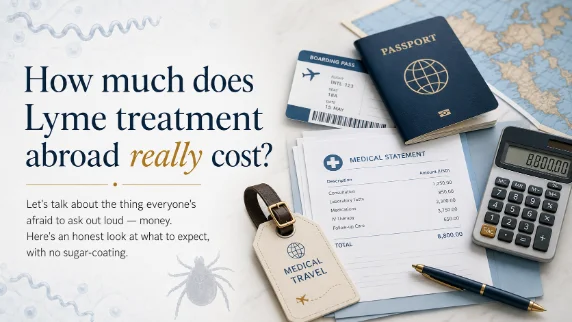
- Sliding-scale or in-country options — sometimes a well-chosen program closer to home changes the math. (See what treatment abroad really costs.)
Extra help when it's your child
If you're fighting for a sick child, please know two things. First, several assistance programs specifically prioritize children — start there. Second, campaigns and community support often rally hardest around kids, so don't hesitate to share your child's story (safely and honestly). As a mom who watched Lyme touch my own family, I understand this particular desperation — and I'm glad to help you find the right doors to knock on.
You don't have to figure this out alone
One more avenue worth knowing about: if chronic Lyme has left you unable to work, you may qualify for Social Security disability (SSDI/SSI) — it's a hard road, but a real one, and I've written a realistic guide to it.
Money is often the wall people hit right when they've finally found hope — and it's one of the reasons I do this work for free. If you're staring at a treatment you can't see how to afford, let's talk through the options together. Sometimes just having someone map the stack with you turns "impossible" into "a plan."
Funding & Financial Help FAQ
Standard early treatment is often covered, but chronic care, treatment abroad, and many advanced therapies frequently aren't — they're usually paid out of pocket. Still, some costs can sometimes be partially reimbursed, and The Lyme Specialist works with partners who can help recover part of your costs through insurance (they don't recover 100%, and the partner's fee is a percentage of what's recovered). Always verify your specific coverage.
Yes — several Lyme nonprofits offer treatment grants or financial assistance, sometimes prioritizing children, veterans, or low-income patients. Availability and eligibility change, so check current programs directly and apply early. Grants rarely cover a whole plan but can meaningfully offset costs.
Medical crowdfunding (e.g. GoFundMe) is the most common route — a clear, honest story with a specific goal, photos/video, and regular updates performs best. Many families also hold community fundraisers and combine fundraising with grants and financing.
Almost always by combining sources: savings, crowdfunding, grants, financing or payment plans, partial insurance reimbursement where possible, and careful travel budgeting. There's rarely one funding source — a realistic plan stacks several, and planning ahead helps enormously.
References & further reading
- Centers for Disease Control and Prevention (CDC) — Lyme Disease. cdc.gov/lyme
- International Lyme and Associated Diseases Society (ILADS) — evidence-based guidelines and research. ilads.org
- LymeDisease.org — patient advocacy and education. lymedisease.org
Disclaimer: This article is for general informational and educational purposes only and reflects personal experience. It is not financial, insurance, legal, or medical advice. Programs, grants, eligibility, financing terms, and insurance rules change frequently and vary by situation — always verify current details directly with the relevant organizations, your insurer, and qualified professionals before making decisions. Christina Carter is a patient advocate, not a licensed financial, insurance, or medical professional. Mention of any organization or platform is not an endorsement.