Lyme treatment in Germany: clinics, hyperthermia & what to expect
For decades, Germany has been the place people with chronic Lyme travel when they've run out of options at home. Here's why — the German clinics, what whole-body hyperthermia actually involves, and how to think about the trip, from a family who did it.
When my husband first said the word "Germany," I almost laughed. I could barely get across my own house some days — how on earth was I going to get across the ocean? But we did it, as a family, and looking back, the trip itself was far more doable than the fear of it. Let me demystify the whole thing — starting with why Germany, then the practical trip.
Quick answer
Where can you get Lyme disease treatment in Germany?
Germany's best-known offering for chronic Lyme is whole-body hyperthermia, delivered at specialized clinics that have used controlled high-fever therapy against Borrelia and co-infections for decades — an approach not widely available in the United States. The most prominent is Klinik St. Georg in Bad Aibling, Bavaria, a long-established hospital that treats international tick-borne-disease patients (it's where my own family was treated in 2017). Other German and European clinics offer hyperthermia too, usually within integrative programs that combine it with antibiotics, IV therapies, detox, and immune support in one supervised stay. The right clinic depends on your case and co-infections — this isn't an endorsement of one over another.
Key Takeaways
- Germany is a decades-old global hub for whole-body hyperthermia — where many chronic-Lyme patients go after running out of options at home.
- Klinik St. Georg (Bad Aibling) is the best-known clinic, known for extreme whole-body hyperthermia.
- It’s a significant, mostly out-of-pocket investment. Ask for exactly what’s included in writing.
- It isn’t right for everyone — a good clinic screens your heart and overall stability first.
- Practical musts: bring someone with you, arrive a few days early, and choose lodging where you can make your own safe food.
Why Germany for Lyme disease?
It's a fair question: why fly across the world when you're already sick? The short answer is that Germany has been a global center for whole-body hyperthermia for decades, and its clinics have accumulated experience with chronic Lyme that simply isn't widely available in the United States. A few reasons people go:
- Hyperthermia expertise. German clinics pioneered medical whole-body hyperthermia — raising core body temperature under careful medical control to target heat-sensitive Borrelia and co-infections. It's their bread and butter.
- Integrative, all-in-one programs. Rather than piecing treatment together over years, a German clinic stay often combines hyperthermia with antibiotics, IV nutrients, ozone or other therapies, detox support, and daily physician oversight in one supervised block.
- They treat international patients constantly. The staff are used to welcoming sick, nervous travelers from all over the world. You won't be the first wobbly arrival they've helped — they do this every week.
The German Lyme clinics
The best-known name in this world is Klinik St. Georg in Bad Aibling, Bavaria — a long-established clinic that has offered whole-body hyperthermia for tick-borne disease for many years. It's where my own family was treated in 2017, so I can speak to it firsthand: it's a real hospital setting with an experienced international team. There are other German and European clinics offering hyperthermia as well, and the right one depends on your specific case, your co-infections, and the kind of program you need.
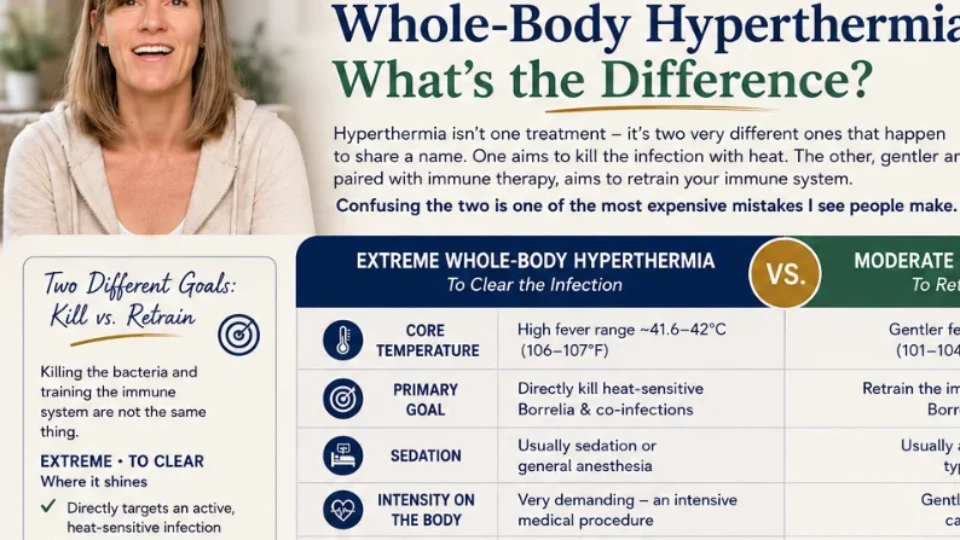
One important thing I've learned since: not all hyperthermia is the same. The German clinics are best known for extreme whole-body hyperthermia — very high, carefully controlled heat aimed at killing the organisms directly. Newer clinics elsewhere pair moderate hyperthermia with immune therapy instead. If you're weighing where to go, it's worth understanding the difference between extreme and moderate hyperthermia and reading my complete guide to whole-body hyperthermia before you decide. I also put together an honest comparison of the major Lyme treatment centers to help you see the options side by side.
What does it cost?
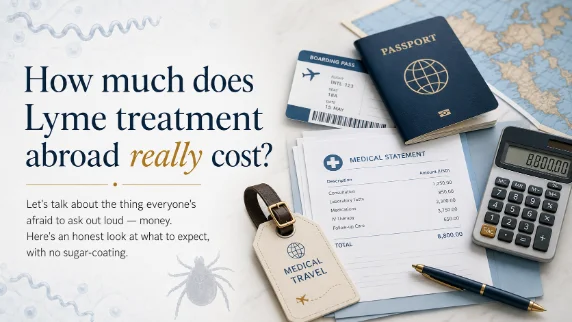
I'll be straight with you: treatment in Germany is a significant investment, and it's almost always paid out of pocket, since most insurers won't cover care abroad up front. The total depends on the clinic, how long you stay, and everything the program includes — plus travel, lodging, and bringing a companion. The one piece of good news: some patients recover part of the cost afterward through insurance-billing partners who work on a percentage of what they recover. It's not 100%, but it can meaningfully soften the blow. When people ask me for numbers, I always point them to a consultation, because a real figure for your case beats a scary internet estimate every time.
Rather than one headline price, it helps to understand what actually drives the cost of Lyme treatment in Germany — so you can compare programs honestly instead of by sticker alone:
- The clinic and its protocol. Whole-body hyperthermia programs differ in what's bundled — labs, IVs, supportive therapies, follow-up — and that bundle, not the headline number, is what you're really comparing.
- Length of stay. Programs run from a couple of weeks to several, and duration is usually the single biggest driver of the total.
- Travel & lodging. Flights, an apartment or hotel near the clinic, meals, and local transport for the whole stay.
- A companion. You shouldn't do this alone — budget for a second person's travel and stay too.
- Co-infection & aftercare treatment. Addressing Babesia, Bartonella, and recovery support at home adds to the picture beyond the clinic bill.
- What you may recover afterward. Insurance-billing partners can claw back a percentage of out-of-pocket costs later — worth asking about before you go.
Because those variables swing the total so much, the most useful thing I can do is walk your specific situation through them on a free call — rather than hand you a number that may not fit your case.
Is it right for everyone?
Honestly, no — and any clinic worth trusting will screen for that. Whole-body hyperthermia asks a lot of the heart and circulation, so a good program reviews your history, your current stability, and any other conditions before clearing you. Being fragile doesn't automatically rule it out, but it changes the plan — sometimes the type or intensity of heat they'll use. This is exactly why the conversation before the trip matters as much as the trip itself: the goal is a program matched to your body, not a one-size protocol.
What a treatment day actually looks like
The fear of the unknown is usually worse than the days themselves, so here's the shape of it. Most of your time abroad isn't spent in dramatic treatment — it's spent resting, because your body is working hard and needs it. A typical day is built around your therapies (an infusion, a session, monitoring) with long, quiet stretches in between. On a hyperthermia day you're watched closely the whole time; on the days between, the focus shifts to supportive care — IV nutrients, detox support, and recovery. It's less "hospital drama" and more slow, watched, deliberate healing. That rhythm genuinely surprised me: I braced to be pushed, and instead I was mostly told to rest.
Getting ready before you go
A little preparation makes the whole trip easier. Here's the short version of what's worth sorting out before you fly — each point is expanded in the sections below.
- Bring a companion. Don't do this alone if you can possibly help it.
- Arrive a few days early. Rest and adjust to the time change before treatment begins.
- Sort your lodging. An apartment or hotel near the clinic, chosen for comfort and quiet over cost.
- Pack for long, restful days — comfort, warmth, and the things that soothe you — not sightseeing.
- Handle the practical stuff early — money, phones, documents, logistics — so you're not solving problems while you're depleted.
We filmed how we got ready, day by day — it's the part people tell me they most wish they'd seen before they went:
Bring someone with you
If you take one thing from this whole article, let it be this: do not go alone if you can possibly help it. A spouse, a parent, a friend — someone to carry the bags, remember the details, sit with you on the hard days, and celebrate the good ones. James was with me, and I honestly don't know how I'd have done it otherwise.
Apartment or hotel?
This is one of the most practical decisions, and here's how I think about it:
- An apartment gives you a kitchen (huge when you're on a special diet), laundry, more room to rest, and a more homey feel for a longer stay.
- A hotel is simpler and more serviced for a shorter trip, with less to manage day to day.
For longer treatment, most families I talk to lean toward an apartment near the clinic — being able to make your own safe food is worth a lot.
Come a few days early
Don't fly in and start treatment the next morning. Give yourself a few days to land, sleep, adjust to the time change, and let your body settle. You'll handle treatment better rested than wrecked from travel. Arriving early was some of the best advice we got.
What to pack
- All your medications and supplements, in your carry-on, with a little extra in case of delays
- Comfortable, easy clothes and layers — you'll be resting a lot
- Any comfort items that help you feel human: your own pillow, cozy socks, a favorite tea
- Snacks and safe foods for the flight and the first day
- A folder with your medical records, test results, and a simple summary of your history
- Entertainment for the downtime — books, headphones, downloaded shows
The practical stuff
- Language: the clinic staff generally speak English, but a translation app on your phone is handy for shops and taxis.
- Money: have a card that works internationally and a little local cash for small things.
- Getting around: staying close to the clinic keeps daily travel short, which matters a lot when you're wiped out.
- Phone: sort out an international plan or eSIM before you go so you can stay in touch with family back home.
One honest thing about the treatment itself
The hyperthermia done in Germany is the extreme form of whole-body hyperthermia — high, carefully controlled heat aimed at killing the organisms directly. For us, it worked: follow-up testing and darkfield microscopy confirmed it cleared 100% of the Borrelia. But I want you to know something I learned the hard way — clearing the infection isn't the same as becoming immune to it. When my daughter was bitten again, she was reinfected. That's why I now pay close attention to newer approaches that pair moderate hyperthermia with Treg therapy to help the immune system recognize Borrelia going forward. I explain all of this in my complete guide to whole-body hyperthermia.
You can do this
I know it feels like a mountain. But thousands of people make this trip and come home changed. If you want, I'll help you think through the logistics for your specific situation — I've walked this exact path, suitcase and all.
Travel questions, answered
Germany has been a center for whole-body hyperthermia for decades, and several German clinics have deep experience using controlled high-fever therapy against Borrelia and co-infections — an approach not widely offered in the US. Patients also travel there for integrative programs that combine hyperthermia with antibiotics, IV therapies, detox, and immune support in one supervised stay.
Germany has long been a center for whole-body hyperthermia, with specialized clinics experienced in treating international Lyme patients. Klinik St. Georg in Bad Aibling, Bavaria is one of the best known and is where my own family was treated. The right clinic depends on your case; a consultation can help match you to a program that fits.
Costs vary widely by clinic, length of stay, and what's included, and are generally paid out of pocket since most insurers don't cover treatment abroad. With travel, lodging, and a companion it's a significant investment. Some patients recover part of the cost afterward through insurance-billing partners who work on a percentage of what they recover. A consultation gives you realistic numbers.
It varies by program, but many whole-body hyperthermia stays run a couple of weeks, plus a few extra days at the start to rest and adjust to the time change before treatment begins. Your clinic will give you a specific schedule.
Yes, strongly recommended if at all possible. A companion helps with luggage, logistics, remembering medical details, and emotional support on hard days. Most patients find traveling with a spouse, family member, or friend makes the whole experience far more manageable.
References & further reading
- Centers for Disease Control and Prevention (CDC) — Lyme Disease. cdc.gov/lyme
- International Lyme and Associated Diseases Society (ILADS) — evidence-based guidelines and research. ilads.org
- LymeDisease.org — patient advocacy and education. lymedisease.org
Medical disclaimer: This article is for educational purposes only and reflects personal experience and research. It is not medical advice, diagnosis, or treatment, and it does not replace consultation with a qualified healthcare professional. Individual results vary. Always consult your physician before pursuing any treatment.