Therapeutic Apheresis for Lyme: Clearing the Inflammatory Load
Before you can retrain a dysregulated immune system, you often have to clear what's weighing it down. Therapeutic apheresis is the blood-filtering step that does that work — and it's become an essential part of the Lyme Re-code sequence my own family went through. Here's an honest look at what it is, what it does, and what the evidence shows.


Key takeaways
- Apheresis is a blood-filtering procedure, not a drug. Blood is drawn, a target fraction of the plasma is filtered out, and the rest is returned to you — nothing donor-derived is added.
- It clears the inflammatory load, it doesn't kill Borrelia. The goal is to remove the accumulated debris — inflammatory lipids, immune complexes, cytokines, mold and pathogen byproducts — that keeps an immune system stuck.
- It's the "clear" step before "recalibrate." In Lyme Re-code, apheresis prepares the terrain so Treg therapy (and, later, hyperthermia) land on a cleaner, more responsive system.
- The procedure is established medicine; the Lyme use is emerging. Apheresis is standard care for certain other conditions, but for chronic Lyme the published data is small and uncontrolled — strongest on inflammatory lipids.
- It's not for everyone, and it's not a cure. It's invasive, candidacy is screened by a medical team, and results vary.
Quick answer
What is therapeutic apheresis for Lyme disease?
Therapeutic apheresis is a medical blood-filtering procedure: blood is drawn, passed through a filter that separates out a target fraction of the plasma, and then returned to the body. For chronic Lyme the version typically used is a membrane-based double-filtration plasmapheresis (one branded system is INUSpheresis), designed to remove larger inflammatory molecules while keeping the proteins the body needs. Clinics that use it for Lyme describe it as clearing an accumulated inflammatory load — inflammatory lipids, immune complexes, autoantibodies, cytokines, and pathogen- and mold-derived debris — so that immune-recalibrating treatments land on a cleaner internal environment. It does not kill the Lyme bacteria directly. Apheresis is well established in mainstream medicine for certain other conditions, but its use for chronic Lyme is emerging and not an FDA-approved standard of care; the published Lyme data is small and uncontrolled, and candidacy is assessed by a medical team.
What is therapeutic apheresis?
"Apheresis" simply means to take away. In practice, therapeutic apheresis is a procedure where your blood is drawn through a line, circulated through a device that separates it into components and filters out a specific target fraction, and then returned to your body. It's the same broad family of technology used in established medicine to treat certain neurological, kidney, and blood disorders — so the procedure itself is not fringe, even though its use for chronic Lyme is newer.
The version most often used in chronic illness is double-filtration plasmapheresis (DFPP) — sometimes delivered through a branded system such as INUSpheresis. A first filter separates the plasma from your blood cells; a second, finer membrane then sieves out the larger molecules while letting the smaller proteins your body needs (like albumin) pass back through. The cleaned plasma is recombined with your cells and returned to you. Unlike a transfusion, nothing donor-derived is added; unlike dialysis, the goal isn't to replace kidney function but to lift out a specific inflammatory burden.
What it filters from the blood
Here's where I want to be careful and precise, because this is where marketing and evidence often blur. A double-filtration membrane is designed to remove larger, high-molecular-weight substances from plasma while returning the smaller proteins. In chronic illness, the targets the clinics describe include:
- Inflammatory lipids — such as oxidized LDL and lipoprotein(a), which are elevated in many chronic-Lyme patients. This is the part with the most actual measurement behind it.
- Immune complexes and autoantibodies — the clumped antibody-antigen debris and self-directed antibodies that can keep inflammation and autoimmune-type symptoms running.
- Cytokines and inflammatory signaling molecules — the chemical "alarm bells" that keep the immune system in overdrive.
- Mold toxins and pathogen-derived debris — mycotoxins and microbial byproducts that add to the body's total load.
An honest flag: the strongest published measurements in Lyme patients are the reductions in inflammatory lipids. The broader claims — clearing cytokines, toxins, heavy metals — come largely from clinic and device-maker descriptions rather than controlled trials. That doesn't make them wrong, but it does make them rationale rather than proof, and you deserve to know which is which.
Why it's used for Lyme — and where it fits
If you've read my other guides, you know the recurring theme: in long-standing Lyme, the problem often isn't only the infection — it's an immune system stuck in overdrive, drowning in the inflammatory signals the illness left behind. You can try to recalibrate that system, but it's like trying to reset a smoke alarm in a room still full of smoke. Apheresis is the step that clears the smoke.
That's exactly why it's become an essential part of the sequence at Lyme Re-code, delivered within the Immunotherapy Institute in Tijuana, Mexico. The program is built around the idea that order is the treatment: you clear the load, then rebuild, then recalibrate — and only then, if needed, go after remaining pathogens with heat.
Clear → Rebuild → Recalibrate
In the program's 10-day and 18-day protocols, apheresis is the "clear" step: it lifts out the inflammatory burden first. IV therapy then rebuilds the body at the cellular level, and autologous Treg therapy restores immune governance — into a body that's finally been prepared to receive it. In the full 18-day protocol, systemic hyperthermia comes last, once the terrain is ready. The therapies matter, but the sequence is the point — and apheresis is what makes the steps after it work the way they're supposed to.
If you want the whole picture, I lay out the full staged program in my guide to Lyme immunotherapy and the Lyme Re-code sequence, and the immune science behind the recalibration step in Treg therapy for Lyme.
What the evidence shows (and doesn't)
The honest state of it: therapeutic apheresis is a well-established, evidence-based procedure in mainstream medicine — but for a defined list of other conditions, not chronic Lyme. For Lyme specifically, there are no large randomized controlled trials. Here's what does and doesn't exist:
- The procedure itself is proven technology. Therapeutic plasma exchange and related apheresis methods are standard, physician-governed treatments for certain autoimmune, neurological, and metabolic disorders. The machinery and safety profile are not experimental.
- The Lyme data is real but limited. The most-cited work is a retrospective series of several hundred patients with a Lyme history, reporting reduced inflammatory lipids (including lipoprotein(a)) and improved symptoms after double-filtration apheresis. That's a meaningful signal — but it's uncontrolled, it leans on lipid measurements, and retrospective series can't prove cause and effect the way a randomized trial can.
- What's missing is controlled Lyme trials. No one has yet run a large, randomized study showing apheresis changes the course of chronic Lyme on its own. That's the honest gap, and it's exactly why it's used as one preparatory part of a plan, not a stand-alone treatment.
So: biologically reasonable, supported by established use elsewhere and by early Lyme data, and — in my family's and many others' lived experience — genuinely helpful as a clearing step. But not a proven cure, and anyone who frames it as one is getting ahead of the evidence.
What a session is actually like
If the word "apheresis" sounds frightening, the reality is calmer than you'd expect. A session looks a lot like an extended IV or blood-donation visit: a line is placed, your blood circulates slowly through the filtering device over roughly a couple of hours, and you rest — often reading, dozing, or talking with the staff — while it runs. You're monitored throughout. Many people feel noticeably lighter and clearer in the days afterward, though a tired or "detox-y" stretch first is common as the body adjusts.
Because it's an invasive procedure, it carries real risks — a drop in blood pressure, bleeding or clotting, reactions to the anticoagulant used to keep the circuit flowing, and line-related issues — which is exactly why it belongs in a monitored medical setting and isn't right for everyone.
Who it's for — and who it isn't
Apheresis tends to be considered for people with chronic Lyme and tick-borne co-infections who carry a heavy inflammatory load — especially when the immune system is clearly overreacting rather than fighting cleanly. Because the same pattern of inflammatory burden shows up elsewhere, people with mold illness / CIRS, long COVID, or chronic EBV are sometimes considered too.
But it isn't universal. It asks something of the cardiovascular system, and people with certain heart, vascular, bleeding, or other conditions may not be candidates — or may need a modified approach. Pregnancy and some medications matter as well. This is a decision for a medical team that has reviewed your full history, not a forum and not me. If a program ever waves off that screening, treat it as a red flag.
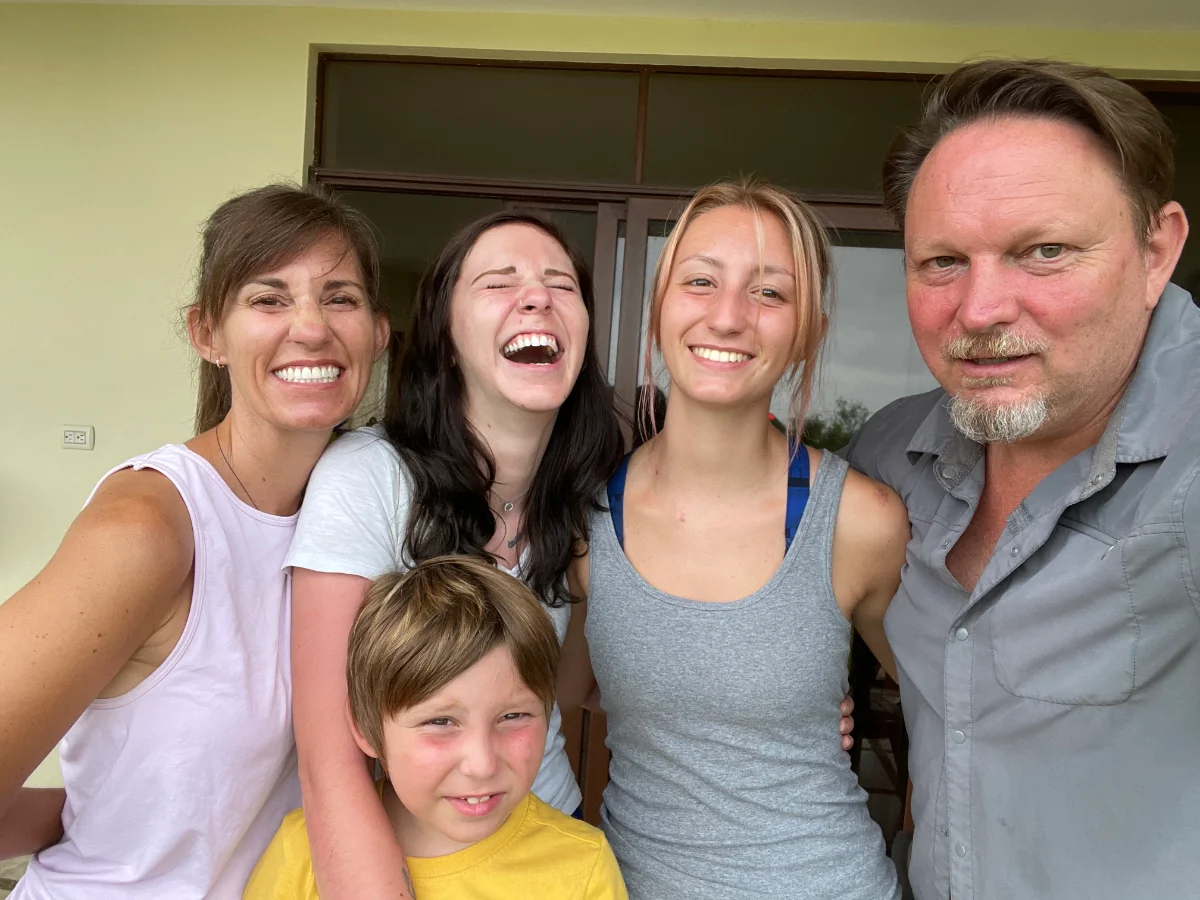
What it was like for my family
I don't write about this from the outside. In our family, apheresis wasn't a standalone experiment — it was woven into the immune work that finally moved the needle.
My husband, James, went through autologous Treg therapy to address the dysregulation that lingered long after his infection cleared — one of those rounds paired with apheresis to clear the inflammatory load first. With his medical team guiding every step, his pain and inflammation eased and long-standing sensitivities lifted. (His fuller story is in the Treg therapy guide.)
Our daughter, Isabella, has improved dramatically since going through Treg therapy and apheresis, and is scheduled for the full systemic-hyperthermia protocol in October 2026. Watching the clearing step make the recalibration step actually work is a big part of why I wanted this therapy to have its own honest page.
I'm not sharing this to sell you anything. I'm sharing it because for years we didn't know this category of help existed — and the order it's done in turned out to matter as much as the therapies themselves.
Please hear this clearly: every treatment and medication decision in our family was made with the doctors managing that person's care, and what happened for us is not a promise for anyone else. Results genuinely vary.
Where to go from here
Apheresis almost never stands alone — it's one step in a staged plan, and whether it belongs in your plan depends on your inflammatory burden, your history, and your goals. That's decided by a medical team at intake, not by a brochure.
The best first step isn't a form — it's a conversation. Talk it through with me first, free and with zero pressure. I'll give you an honest read on whether this whole approach is even worth pursuing for your situation before you spend a dollar or book a flight — and I'll always tell you if I don't think it's the right fit.
Therapeutic apheresis FAQ
It's a medical blood-filtering procedure: blood is drawn, passed through a filter that separates out a target fraction of the plasma, and returned to you. For Lyme the usual version is a membrane-based double-filtration plasmapheresis (one branded system is INUSpheresis), meant to remove larger inflammatory molecules while keeping the proteins you need. It clears an accumulated inflammatory load — it doesn't kill Borrelia directly. The procedure is established medicine for other conditions; the Lyme use is emerging and not an FDA-approved standard of care.
A double-filtration membrane removes larger (high-molecular-weight) substances while returning albumin and other needed proteins. Targets clinics describe include inflammatory lipids (like oxidized LDL and lipoprotein(a)), immune complexes, autoantibodies, cytokines, and mold/pathogen debris. The strongest published measurements in Lyme patients are the lipid reductions; broader claims come mostly from clinic and device-maker sources, so read them as rationale, not proof.
All three move blood outside the body, but the goal differs. Dialysis replaces kidney function by removing small wastes and fluid. A transfusion adds donor blood. Apheresis separates your own blood, filters out a specific target fraction of the plasma, and returns the rest to you — nothing donor-derived is added.
It's the "clear" step. In Lyme Re-code (within the Immunotherapy Institute in Tijuana), apheresis lifts out the inflammatory burden first, so the therapies that follow — Treg therapy and, in the full program, systemic hyperthermia — land on a cleaner, more responsive system. You can't recalibrate an immune system still flooded with the signals driving its dysfunction, so clearing comes before rebuilding and recalibrating.
No large randomized trials have tested apheresis specifically for chronic Lyme. The procedure itself is established in mainstream medicine for other conditions; for Lyme, the main published evidence is a retrospective series of several hundred patients reporting reduced inflammatory lipids and improved symptoms. Encouraging and biologically reasonable — but not proof of a cure. It's best understood as one preparatory part of an individualized plan.
A session is like an extended IV visit — a line is placed, blood circulates through the device over a couple of hours, and you rest while it runs, monitored throughout. Because it's invasive it carries real risks (low blood pressure, bleeding or clotting, reactions to the circuit's anticoagulant, line issues), so it belongs in a monitored medical setting and isn't right for everyone. A medical team screens candidacy.
For chronic Lyme it's offered at a limited number of integrative clinics — often in Europe, and in the Lyme Re-code program within the Immunotherapy Institute in Tijuana, Mexico. As an overseas, largely experimental use, it's generally paid out of pocket and not covered by U.S. insurance. Pricing depends on the program it's part of and is discussed at consultation.
References & further reading
- American Society for Apheresis (ASFA) — Guidelines on the Use of Therapeutic Apheresis in Clinical Practice. apheresis.org
- Therapeutic apheresis: an updated review (mechanisms and clinical uses). ncbi.nlm.nih.gov
- Straube R. et al. Lipid profiles in Lyme borreliosis and the role of double-filtration apheresis — retrospective patient series (lipid and symptom outcomes). Hormone and Metabolic Research, 2019.
- Lyme Re-code — treatment programs (apheresis, Treg therapy, hyperthermia). lymeimmunotherapy.com
Medical disclaimer: This page is for educational purposes only and reflects personal experience and general information about a program the author has a disclosed relationship with. It is not medical advice, diagnosis, or treatment, and it does not replace consultation with a qualified healthcare professional who knows your individual history. Christina Carter is a patient advocate and educator, not a licensed medical provider. Therapeutic apheresis for chronic Lyme is an emerging, largely experimental use; the procedure is invasive, carries risks, and is not appropriate for everyone. Treatments and outcomes vary from person to person, and the results described here are personal and not typical or guaranteed. Never start, stop, or change any medication or treatment except under the direction of your physician.