Tick Bite While Pregnant: What to Do Right Now
First: breathe. Most tick bites don't transmit anything — but a bite during pregnancy is a reason to act calmly and promptly rather than wait and worry. Here's exactly what to do right now, why the treatment choice is a little different when you're pregnant, and when to pick up the phone.
Quick answer
I got a tick bite while pregnant — what should I do?
Remove the tick promptly and completely with fine-tipped tweezers, pulling straight out close to the skin, then clean the area. Save the tick if you can. Contact your prenatal provider to report the bite and ask how to proceed — don't wait for symptoms. Note the date. A tick bite in pregnancy is a reason to talk to your clinician promptly rather than watch and wait. This is not medical advice.
Key Takeaways
- Remove the tick properly and promptly — tweezers close to the skin, straight out, then clean.
- Save the tick if you can, and note the date of the bite.
- Call your prenatal provider — report it, don't wait for symptoms.
- The antibiotic choice differs in pregnancy — doxycycline is usually avoided, so a clinician picks a pregnancy-safe option.
- The risk is untreated infection, not the bite itself — prompt care is what protects you and your baby.
Do this right now
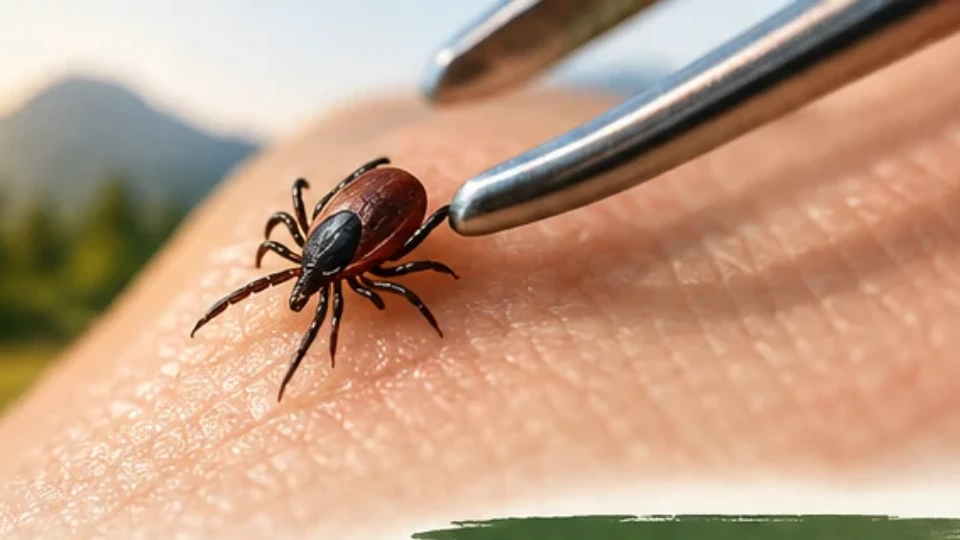
- Remove the tick properly. Use fine-tipped tweezers, grasp the tick as close to your skin as possible, and pull straight up with steady, even pressure. Don't twist, and don't use heat, nail polish, or petroleum jelly — those old tricks can make things worse. Then wash the area and your hands.
- Save the tick. Drop it in a small sealed bag or container (a photo helps too). Identifying the tick and how long it was likely attached can help your provider decide what to do.
- Note the date and location on your body. Write down when you found it and where. This matters if any symptoms show up later.
- Call your prenatal provider. Report the bite and ask how they'd like to proceed. In pregnancy, this is a "phone the doctor" moment, not a "wait and see" one — you want the decision made in time.
For the general, non-pregnancy version of these steps and more detail on removal, see what to do after a tick bite.
Why pregnancy changes the calculus
Two things are different when you're pregnant. First, the stakes: an untreated tick-borne infection can, in some cases, affect the pregnancy — which is why clinicians tend to lean toward earlier evaluation and, when appropriate, treatment, rather than watchful waiting. Second, the treatment: the antibiotic most often reached for after a higher-risk tick bite, doxycycline, is generally avoided in pregnancy, so your provider will typically choose a pregnancy-appropriate alternative instead.
I'm deliberately not naming drugs or doses — that's a decision only your clinician can make, weighing the type of tick, how long it was attached, local infection rates, and your history. What I want you to take from this is simply: report the bite promptly so that decision gets made on time.
What to watch for afterward
After a bite, keep an eye out over the following weeks for a rash (including but not limited to the bull's-eye), fever, flu-like feelings, headaches, or unusual fatigue — and report anything to your provider. But here's the honest caveat: the classic bull's-eye rash frequently never appears, and standard Lyme blood tests are often negative in the first few weeks. So don't use "I feel fine" as the all-clear. Reporting the bite and following your clinician's guidance is safer than relying on symptoms alone.
If you're worried about Lyme and your baby
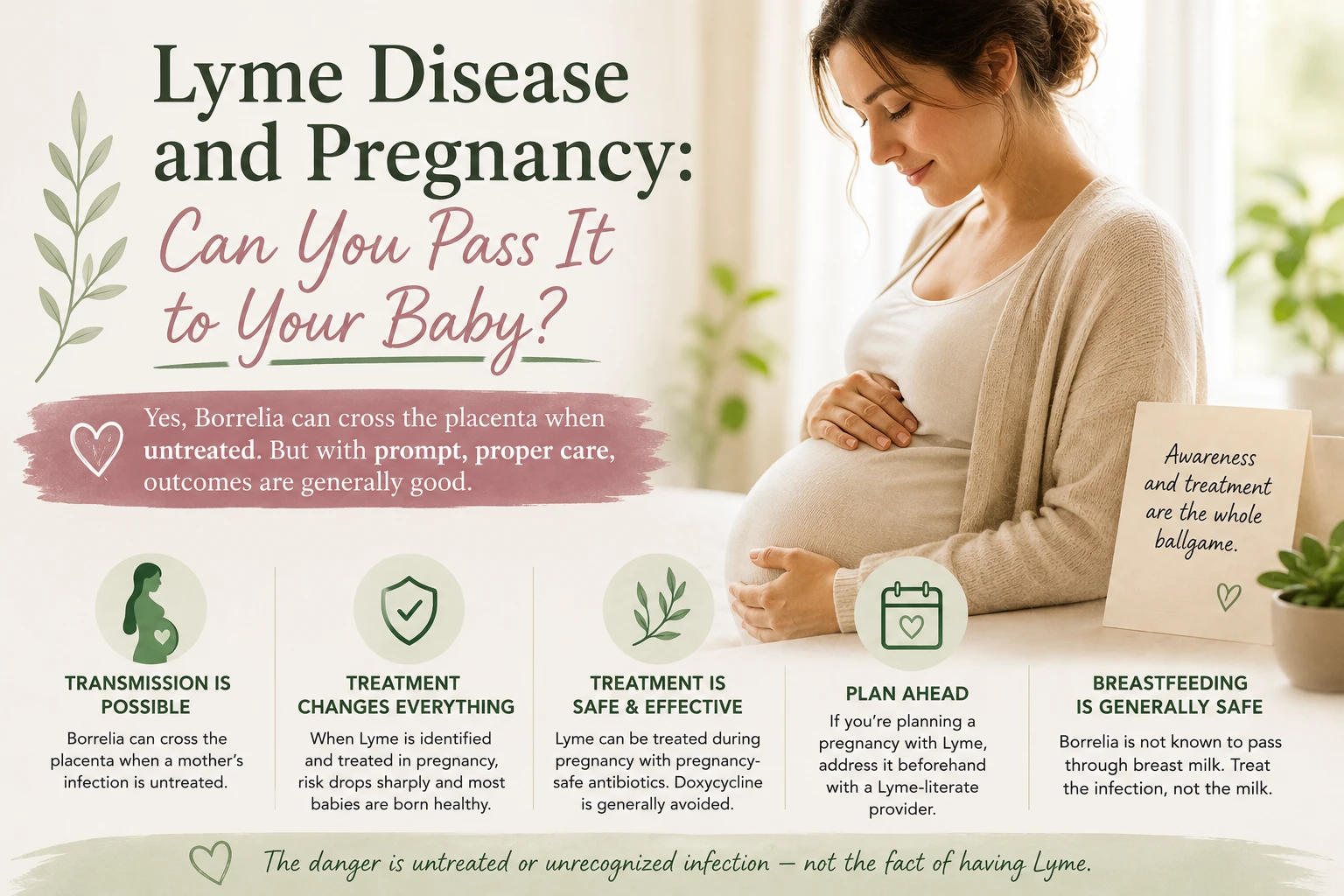
The fear underneath most tick-bite-in-pregnancy searches is really about the baby. Here's the grounded version: the bite itself isn't the danger — an untreated infection it might transmit is. Untreated Lyme in pregnancy can, in some cases, pass to the baby, something called congenital Lyme disease. That sounds frightening, and I won't pretend otherwise — but it's precisely why prompt care matters so much, because with timely, appropriate treatment the risk drops sharply. If you want the fuller picture, read Lyme disease and pregnancy.
And if your provider doesn't take tick-borne illness seriously, that's worth addressing — you deserve someone who does. Here's how to find a Lyme-literate clinician.
Tick Bite in Pregnancy FAQ
Remove the tick promptly and completely with fine-tipped tweezers, pulling straight out close to the skin, then clean the area. Save the tick if you can, and note the date. Contact your prenatal provider to report the bite and ask how to proceed — don't wait for symptoms. A tick bite in pregnancy is a reason to talk to your clinician promptly rather than watch and wait. Not medical advice.
Most tick bites don't transmit disease, but the concern in pregnancy is that an untreated tick-borne infection can carry risk for both mother and baby. That's why prompt evaluation matters — the danger is tied to untreated, unrecognized infection, and early attention markedly reduces it. Report any tick bite in pregnancy to your provider. Not medical advice.
Doxycycline is a common first-line antibiotic for tick bites in general, but it's usually avoided during pregnancy, so a clinician typically chooses a pregnancy-appropriate alternative. Any decision about antibiotics — whether to treat, which drug, and the dose — must be made by your provider. Not medical advice.
That's a decision for your clinician, based on the type of tick, how long it was attached, local infection rates, and your history. In pregnancy, providers often lean toward earlier evaluation and, when appropriate, treatment. The key action on your part is to report the bite promptly rather than wait. Not medical advice.
You may not know right away. A bull's-eye rash is a strong sign but frequently never appears, and standard Lyme blood tests are often negative in the first weeks. Watch for a rash, fever, flu-like feelings, or unusual fatigue and report anything — but don't rely on symptoms alone, because early infection can be quiet. Following your clinician's guidance is safer than waiting. Not medical advice.
The bite itself isn't the concern; an untreated infection it may transmit is. Untreated Lyme in pregnancy can, in some cases, pass to the baby (congenital Lyme), which is why prompt care matters so much. With prompt, appropriate treatment, outcomes are generally good and most babies are born healthy. Work closely with a Lyme-literate prenatal provider. Not medical advice.
References & further reading
- Centers for Disease Control and Prevention (CDC) — Tick Removal & Lyme Disease. cdc.gov/lyme
- International Lyme and Associated Diseases Society (ILADS) — evidence-based guidelines and research. ilads.org
- MedlinePlus (U.S. National Library of Medicine, NIH) — Lyme Disease. medlineplus.gov
Medical disclaimer: This article is for educational purposes only and reflects personal experience and general information. It is not medical advice, diagnosis, or treatment, and it does not replace consultation with a qualified healthcare professional. Decisions about tick-bite care, testing, treatment, medication, and pregnancy must be made with a qualified clinician who knows your history. Christina Carter is a patient advocate and educator, not a licensed medical provider. Individual results vary. Always consult a qualified clinician.