Lyme Disease and Pregnancy: Can You Pass It to Your Baby?
If you're pregnant and have Lyme — or think you might — this is one of the most frightening questions you can carry: could I pass this to my baby? I'm going to give you the honest answer, the hopeful part that matters just as much, and the one thing I wish someone had told me before I had my son.
I need to start this one differently, because it's the most personal page I've written. When I was pregnant with my son, I had active, untreated Lyme disease — I just didn't know it yet. I didn't understand what was making my whole family sick. My son Cameron was later diagnosed with congenital Lyme. I've carried that ever since, and I'm choosing to open a very tender door for one reason: so another mother catches this sooner than I did.
So let me answer the question you came here with, plainly. Yes — an untreated mother can pass Borrelia, the Lyme bacterium, to her baby during pregnancy. That's the hard truth, and you deserve it straight. But here is the part that matters just as much, and the part fear will try to hide from you: this is overwhelmingly about untreated infection, and with prompt, proper care during pregnancy, outcomes are generally good. Awareness and treatment are the whole ballgame.
Quick answer
Can you pass Lyme disease to your baby during pregnancy?
Yes, it is possible. Untreated Lyme disease during pregnancy can transmit the Borrelia bacterium across the placenta to the baby, and adverse outcomes have been documented. The most important point is that this concerns untreated infection. With prompt, appropriate medical care during pregnancy, outcomes are generally good. Any woman who is pregnant with Lyme, thinks she may be infected, or is planning a pregnancy should work closely with a knowledgeable, Lyme-literate clinician. This is not medical advice.
Key Takeaways
- Yes, transmission to the baby is possible — Borrelia can cross the placenta when the mother's infection is untreated.
- Treatment changes everything. When Lyme is identified and treated in pregnancy, the risk drops sharply and most babies are born healthy.
- The danger is untreated or unrecognized infection — not the fact of having Lyme.
- Lyme can be treated during pregnancy with pregnancy-safe antibiotics; doxycycline is generally avoided — a clinician chooses the drug.
- If you're planning a pregnancy with Lyme, address it beforehand with a Lyme-literate provider where you can.
Can Lyme pass to the baby?
Lyme disease is caused by a corkscrew-shaped bacterium — a spirochete called Borrelia burgdorferi and its relatives. Spirochetes are unusually good at crossing barriers in the body that stop almost everything else, including, in some cases, the placenta. That's the mechanism behind mother-to-baby (congenital Lyme) transmission: in an untreated infection, the bacteria circulating in the mother can reach the developing baby.
This isn't fringe speculation. The same broad family of bacteria includes Treponema pallidum, which causes syphilis — a spirochete famous for crossing the placenta and harming a baby when a mother's infection goes untreated. Borrelia is a close, more complex cousin. That biological kinship is a big part of why researchers and Lyme-literate clinicians take gestational Lyme seriously rather than waving it off.
What I want you to hold onto is the qualifier that keeps showing up: untreated. Transmission risk is tied to active, unaddressed infection during pregnancy — which is exactly why finding out and getting care is so powerful. And if what brought you here is a recent bite, start with what to do about a tick bite while pregnant.
What the risk actually looks like
Here's where honesty cuts both ways. Older case reports — from an era when maternal Lyme often went unrecognized and untreated — linked infection in pregnancy to adverse outcomes, including miscarriage and harm to the baby. Those reports are real, and I won't pretend they aren't.
But the fuller picture is more hopeful than the scariest headlines suggest. Unlike syphilis, Lyme has not been shown to cause a consistent, well-defined congenital syndrome, and larger studies have generally been reassuring — especially when infection is identified and treated. The recurring theme across the research is simple and worth tattooing on your heart: prompt treatment dramatically reduces the risk, and most treated mothers go on to have healthy babies.
So if you're reading this with a racing heart, let the fear do exactly one useful thing: push you to get evaluated and cared for quickly. Then let it go, because panic doesn't protect your baby — good care does.
Treating Lyme during pregnancy
Yes — Lyme can and should be treated during pregnancy, and prompt treatment is the single most protective thing you can do. The main practical difference from treating a non-pregnant patient is drug choice: doxycycline, a first-line Lyme antibiotic in general, is generally avoided in pregnancy, so clinicians typically reach for other pregnancy-appropriate antibiotics instead.
I'm deliberately not going to name doses or hand you a protocol — that would be irresponsible, and it genuinely varies by person, trimester, and history. Drug selection, dosing, and duration must be decided by a qualified clinician who understands tick-borne infection in pregnancy. What I will tell you is that "wait and watch" is not a comforting plan when you're carrying a baby; this is a situation where being evaluated quickly, by the right person, matters enormously.
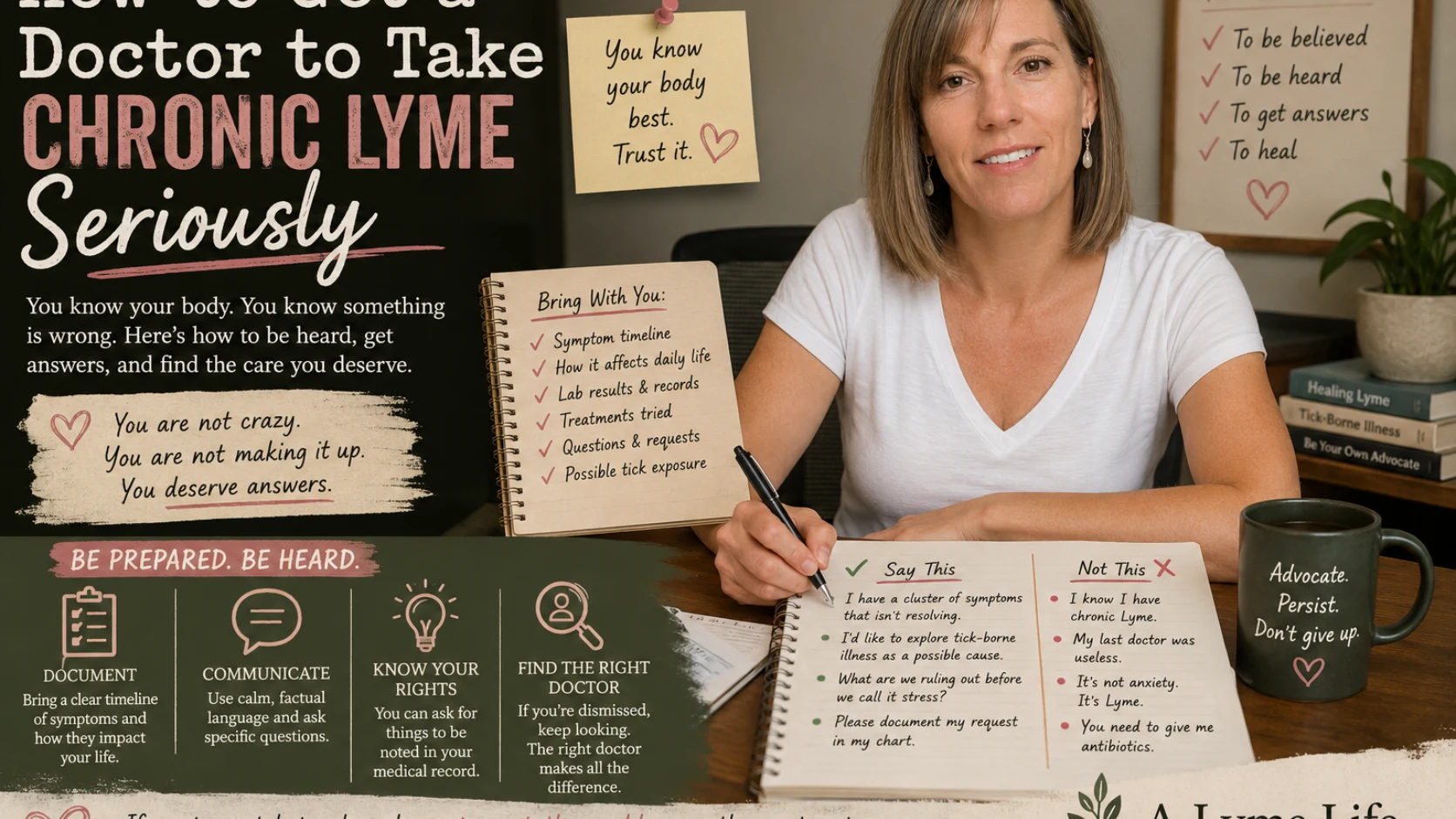
This is also why the kind of doctor you see is so important. A provider who dismisses chronic or tick-borne illness may under-react. If you're struggling to be taken seriously, that's a real and common problem — I've written about how to get a doctor to take chronic Lyme seriously, and about finding a Lyme-literate clinician who won't leave you to figure this out alone.
If you're planning a pregnancy with Lyme
If you already know you have Lyme and a baby is somewhere on your horizon, the best gift you can give yourself is time to plan before conception. Entering pregnancy with a well-managed or resolved infection is generally preferable to discovering and scrambling to treat it mid-pregnancy.
Preconception planning with a knowledgeable provider lets you make calm, informed choices — about timing, about getting infection well-controlled first, and about what monitoring will look like once you're pregnant. None of this means Lyme takes motherhood off the table. So many women with Lyme go on to have healthy pregnancies and healthy babies. It means you get to walk in with your eyes open instead of being blindsided the way I was.
Breastfeeding and Lyme
This is a question I get a lot, and the honest answer is: it's not fully settled. Borrelia DNA has been detected in breast milk in limited reports — but detecting DNA is not the same as proving live, infectious bacteria that transmit through nursing, and confirmed transmission via breast milk hasn't been demonstrated.
Because the science is incomplete, this is squarely a "decide with your clinician" question rather than something to settle from a website. Your treatment (including any medications you're taking) and your baby's needs both factor in, and a good provider will weigh those with you. I mention it here only so it's on your radar as a conversation to have — not a decision to make alone at 3 a.m.
My story — and why I'm telling it
I don't share that for sympathy. I share it because "get evaluated early" isn't an abstract tip for me — it's the thing I didn't get, and the reason this page exists. Lyme is a family illness in our house; it touched all of us. If reading my hardest chapter makes one pregnant woman push past a dismissive appointment and get properly checked, then telling it is worth it.
And please hear this, because I mean it with my whole heart: if you had untreated Lyme during a pregnancy, this is not a page about blame. None of us can be blamed for a disease the medical system routinely misses and downplays. I refuse to carry that guilt, and I won't hand it to you either. What we can do is make sure the next mother has the information we didn't.
And here's the part I most want you to hold onto: a congenital-Lyme story doesn't end at the diagnosis — it has a next chapter, and that chapter is treatment. I've documented our own, honestly and over time — how we've worked to treat my son's Lyme with the Wiegman Protocol. I won't promise you outcomes, and I won't pretend it's simple. But you are not just being handed a fear; there is a path forward, and people who will walk it with you.
What to ask your provider
Because so much of this comes down to getting the right care fast, here are the questions worth bringing into the room — print this page and take it with you:
- "Do you have experience treating Lyme or tick-borne infection in pregnancy?" If the answer is a shrug, consider a Lyme-literate provider.
- "Given my trimester and history, what pregnancy-safe treatment do you recommend, and how soon can we start?"
- "What monitoring will we do for me and for the baby during and after treatment?"
- "Should we test or evaluate for co-infections?" Ticks often carry more than Lyme — see Lyme co-infections, Babesia, and Bartonella.
- "What should I watch for, and what's the plan for the baby after birth?"
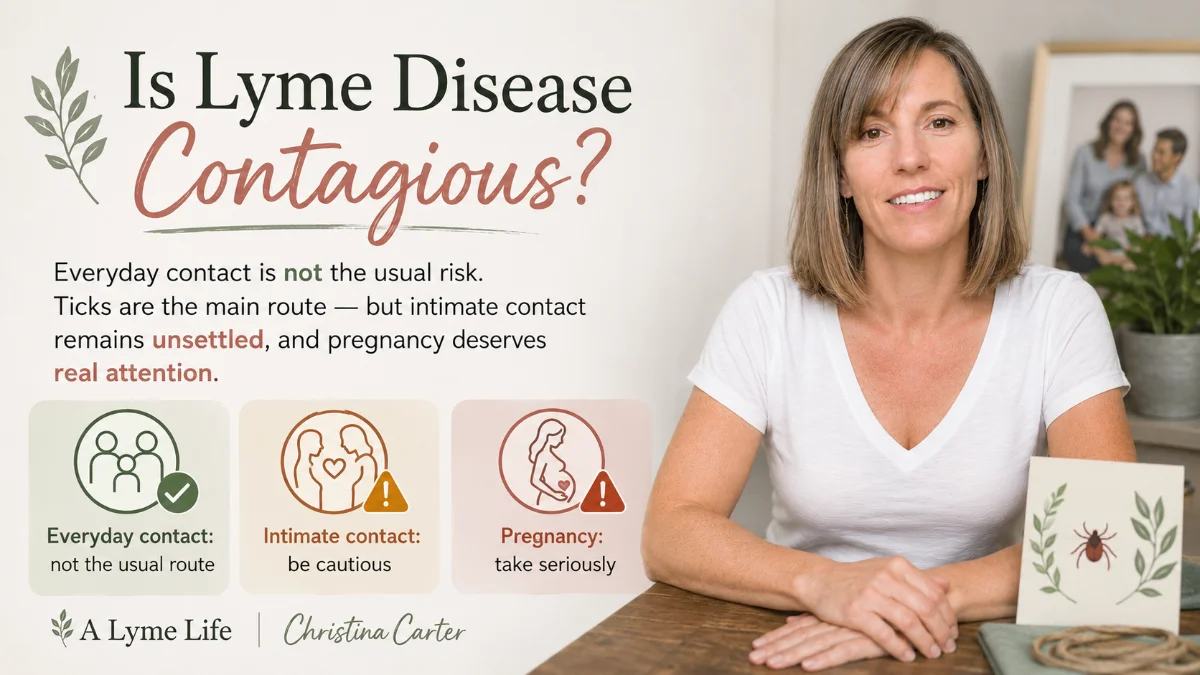
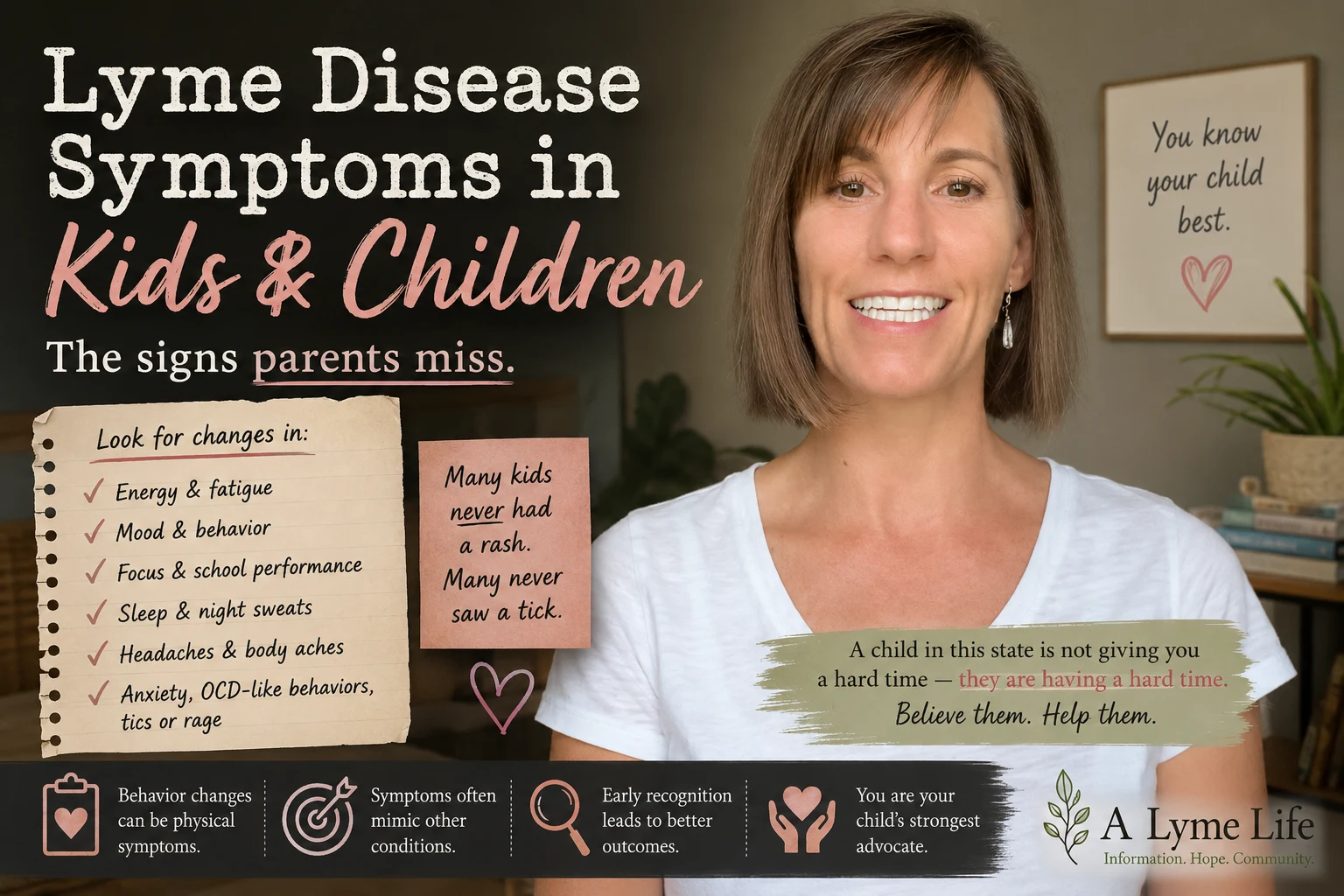
It also helps to understand the disease you're describing to them. If you're newly in this, start with Lyme symptoms and the Lyme rash; if you're worried about transmission within the family more broadly, is Lyme contagious? covers the everyday fears. And in children, Lyme can look different than you'd expect — here's Lyme in kids.
If you're pregnant and frightened, please don't sort the real risks from the myths by yourself. I've lived the version of this story where no one caught it in time — and I would be honored to help you get to a better one.
Lyme & Pregnancy FAQ
Yes, it's possible. Untreated Lyme in pregnancy can transmit Borrelia across the placenta to the baby, and adverse outcomes have been documented. The critical qualifier is untreated — with prompt, appropriate care during pregnancy, outcomes are generally good. Any woman pregnant with Lyme, who thinks she may be infected, or planning a pregnancy should work closely with a Lyme-literate clinician. Not medical advice.
Untreated Lyme in pregnancy carries risk, which is why it's taken seriously. But studies consistently show that when Lyme is identified and treated appropriately during pregnancy, risk drops substantially and most babies are born healthy. The danger is far more about untreated or unrecognized infection than about Lyme itself. Care must be guided by a qualified clinician.
Yes, and prompt treatment is strongly recommended. Pregnancy-safe antibiotics are used, and doxycycline is generally avoided in pregnancy. Drug choice, dosing, and duration must be decided by a qualified clinician knowledgeable about tick-borne infection in pregnancy. Not medical advice.
Case reports have linked untreated maternal Lyme to adverse outcomes including miscarriage and fetal harm. The evidence isn't as clear-cut as it is for syphilis, and larger studies have generally been reassuring when infection is treated. The consistent theme is that prompt treatment markedly reduces risk. Discuss any specific concern with a Lyme-literate obstetric provider.
It's not firmly established. Borrelia DNA has been detected in breast milk in limited reports, but confirmed live, infectious transmission through nursing hasn't been demonstrated. Because the science is incomplete, breastfeeding decisions during active infection or treatment should be made together with your clinician, factoring in your treatment and your baby's needs. Not medical advice.
If you know or suspect you have Lyme and are planning a pregnancy, it's wise to address the infection with a knowledgeable clinician beforehand where possible. Entering pregnancy with well-managed or resolved infection is generally preferable to discovering and treating it mid-pregnancy. Preconception planning with a Lyme-literate provider lets you make informed choices about timing, treatment, and monitoring. Not medical advice.
Yes, untreated Lyme can affect a pregnancy — it's associated with a risk of transmission to the baby and, in older case reports, with adverse outcomes. The consistent theme in the research is that prompt, appropriate treatment during pregnancy markedly reduces that risk, and most treated mothers have healthy babies. The danger is tied to untreated or unrecognized infection, which is why early care matters so much. Not medical advice.
References & further reading
- Centers for Disease Control and Prevention (CDC) — Lyme Disease. cdc.gov/lyme
- International Lyme and Associated Diseases Society (ILADS) — evidence-based guidelines and research. ilads.org
- MedlinePlus (U.S. National Library of Medicine, NIH) — Lyme Disease. medlineplus.gov
- Johns Hopkins Lyme Disease Research Center. hopkinslyme.org
Medical disclaimer: This article is for educational purposes only and reflects personal experience and general information. It is not medical advice, diagnosis, or treatment, and it does not replace consultation with a qualified healthcare professional. Decisions about testing, treatment, medication, pregnancy, and breastfeeding must be made with a qualified clinician who knows your history. Christina Carter is a patient advocate and educator, not a licensed medical provider. Individual results vary. Always consult a qualified clinician.