Co-infections 101: Bartonella, Babesia & why they matter
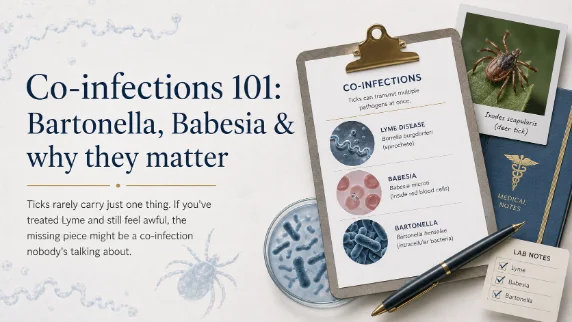
Ticks rarely carry just one thing. If you've treated Lyme and still feel awful, the missing piece might be a co-infection nobody's talking about.
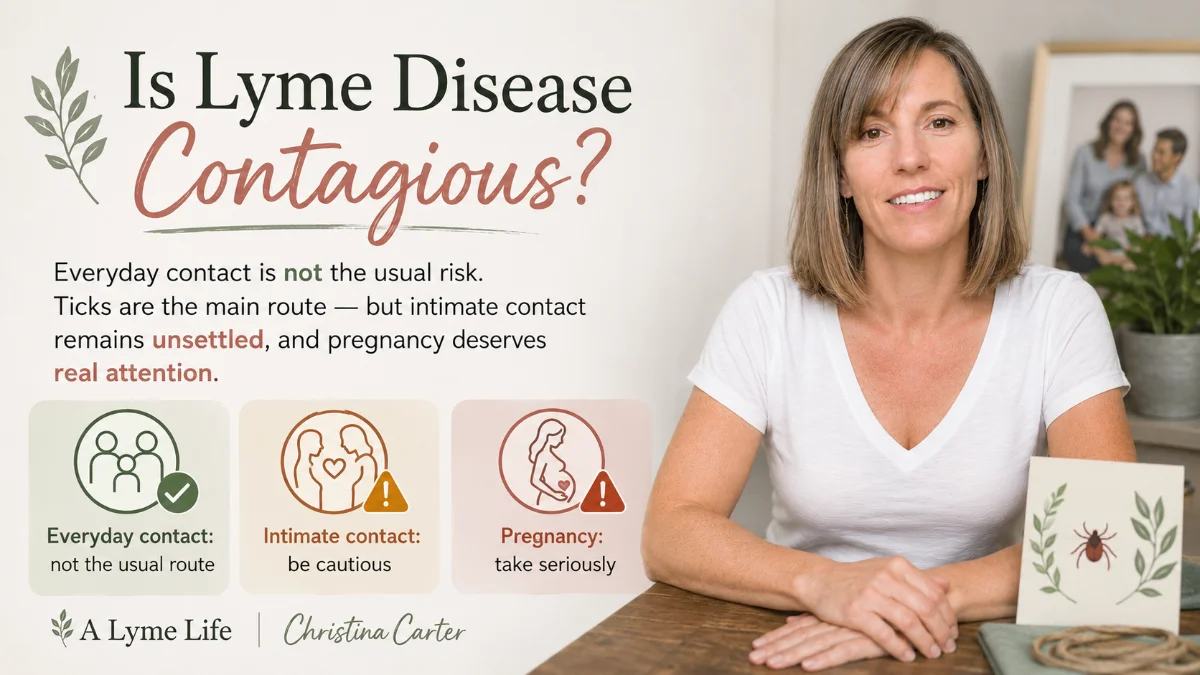
Here's something that took me far too long to understand: a tick bite often isn't just a Lyme bite. Ticks can carry a whole little suitcase of other infections, and they hand them all to you at once. These extras are called co-infections, and they're a huge reason people treat their Lyme and still don't feel better. (And to answer the question families always ask: these come from the tick, not from each other — Lyme and its co-infections are not contagious between people.)
Quick answer
What are the most common Lyme co-infections?
Common tick-borne co-infections include Babesia (a malaria-like parasite), Bartonella, Ehrlichia, Anaplasma, Mycoplasma, and Rickettsia. A single tick bite can transmit more than one infection at the same time, which is why many chronic Lyme patients have one or more co-infections.
Key Takeaways
- Ticks rarely carry just one thing — co-infections may be your missing piece.
- The usual suspects: Bartonella, Babesia, and others alongside Lyme.
- They make everything harder — more symptoms, more complexity, slower recovery.
- Lyme treatment alone won’t clear them — each often needs its own approach.
- Still sick after treating Lyme? Look at the whole picture, not just Borrelia.
What exactly is a co-infection?
It's simply another tick-borne infection riding along with Lyme. You can have one, several, or none — but in chronic, complicated cases, co-infections are common. And here's the kicker: they often need to be treated differently than Lyme itself. Hit only the Lyme, and the others keep the party going.
The usual suspects
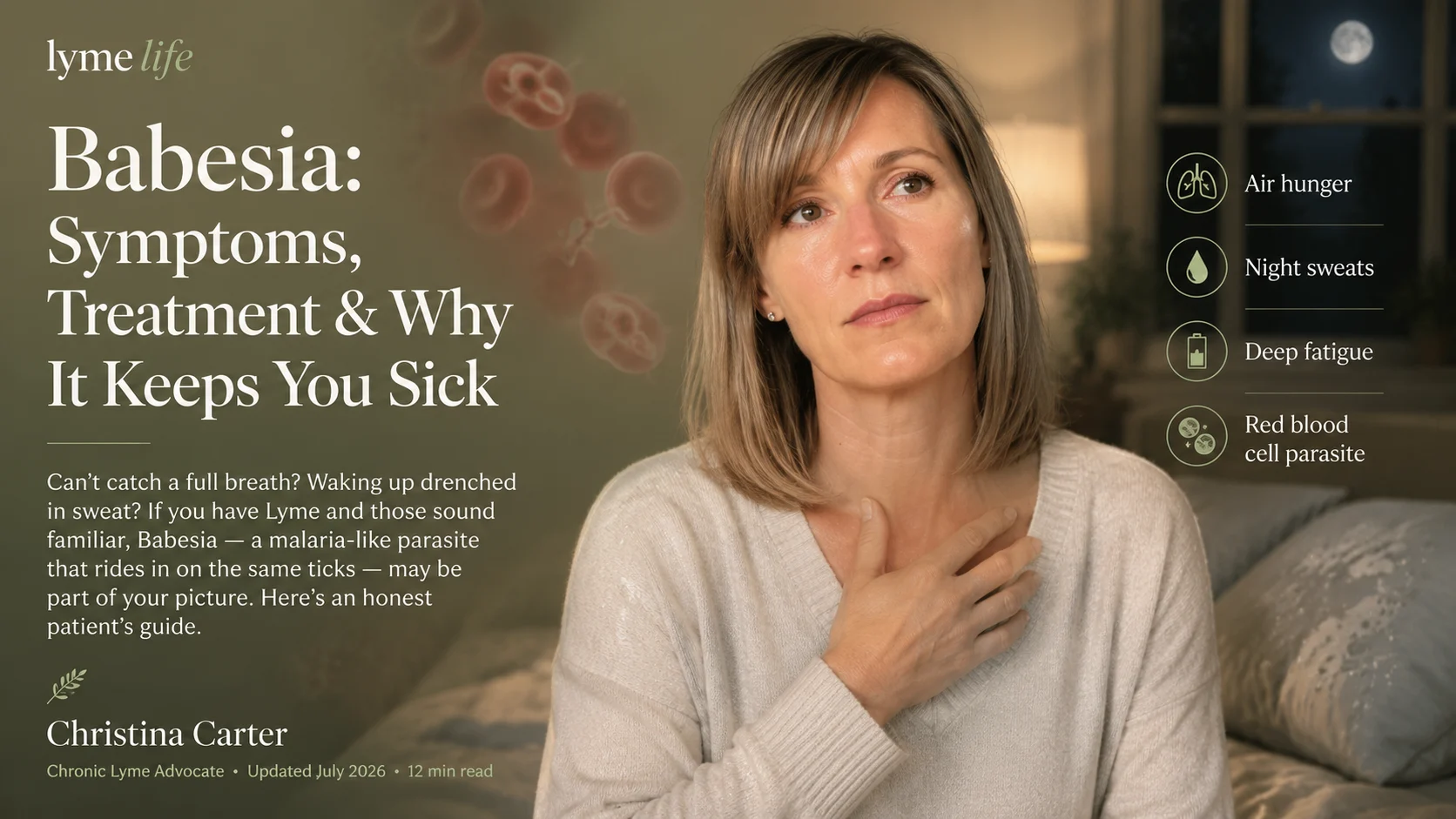
- Babesia. A malaria-like parasite that lives in red blood cells. Classic clues people describe are air hunger (feeling like you can't get a full breath), night sweats, chills, and deep fatigue.
- Bartonella. Known for odd neurological and skin symptoms — think anxiety and mood swings, "ice pick" pains, foot pain (especially in the morning), and stretch-mark-like skin streaks.
- Ehrlichia & Anaplasma. Can bring flu-like illness, headaches, and muscle aches.
- Mycoplasma. A common stealthy passenger that can add to fatigue and brain fog.
- Rickettsia and others. The list keeps growing as we learn more.
- Alpha-gal syndrome. Not an infection but a tick-triggered allergy to red meat — increasingly common, and easy to miss.
For so many people, the reason Lyme treatment "didn't work" is that a co-infection was quietly running the show the whole time.
Why they make everything harder
Co-infections complicate the picture in a few ways:
- They cause overlapping symptoms, so it's hard to tell what's coming from what.
- Some are parasites, some are bacteria — they don't all respond to the same treatments.
- They pile more stress onto an already overwhelmed immune system.
- Testing for them is imperfect, so they're easy to miss.
What this means for you
If you've been laser-focused on Lyme and you're still struggling, it may be worth asking: has anyone looked at the whole tick-borne picture? You don't need to become an expert in all of this — you just need the right people looking at the full map of what's going on in your body.
If that feels overwhelming, that's okay. It's exactly the kind of thing I can help you make sense of, in plain English, on a free call.
Co-infection questions, answered
Common tick-borne co-infections include Babesia (a malaria-like parasite), Bartonella, Ehrlichia, Anaplasma, Mycoplasma, and Rickettsia. A single tick bite can transmit more than one infection at the same time, which is why many chronic Lyme patients have one or more co-infections.
One common reason is an untreated co-infection. Infections like Babesia and Bartonella often need different treatment than Lyme itself, so addressing only the Lyme can leave you symptomatic. Overlapping symptoms and imperfect testing make co-infections easy to miss.
Treatment depends on which co-infections are present, since parasites and bacteria respond differently. Many complex cases benefit from whole-picture approaches that address multiple organisms and support the immune system, rather than targeting Lyme alone. This should be guided by knowledgeable medical professionals.
References & further reading
- CDC — Babesiosis. cdc.gov/babesiosis
- CDC — Bartonella Infection. cdc.gov/bartonella
- International Lyme and Associated Diseases Society (ILADS) — evidence-based guidelines and research. ilads.org
- Centers for Disease Control and Prevention (CDC) — Lyme Disease. cdc.gov/lyme
Medical disclaimer: This article is for educational purposes only and reflects personal experience and research. It is not medical advice, diagnosis, or treatment, and it does not replace consultation with a qualified healthcare professional. Individual results vary. Always consult your physician before pursuing any treatment.