PANS, PANDAS & Lyme in Kids: When an Infection Hijacks Your Child's Brain
One week you have your child. The next, a stranger is living in their body — sudden rage, terror, rituals, a kid who won't eat, can't sleep, doesn't recognize themselves. If your gut is screaming that this came on too fast to be "just behavior," listen to it. For many families, the answer is an infection — and it has names: PANS and PANDAS.
I want to talk to the parent who is frightened right now. The one whose sweet, funny kid changed almost overnight — who is watching rage, obsessive fears, tics, or a total refusal to eat take over a child who was fine a month ago — and who keeps being told it's a phase, a behavior problem, or a psychiatric diagnosis that doesn't quite fit. I've walked tick-borne illness alongside my own daughter. I know that particular terror of watching your child slip away and not being believed.
Here's what too few people will tell you: when a child's mind changes suddenly and dramatically, an infection can be the hidden driver. That's the whole idea behind PANS and PANDAS.
Quick answer
Can Lyme disease cause PANS or PANDAS?
Yes. While PANDAS is specifically tied to streptococcal infection, PANS (Pediatric Acute-onset Neuropsychiatric Syndrome) can be triggered by a range of infections — and tick-borne infections such as Lyme, Bartonella, and Mycoplasma are recognized triggers. The proposed mechanism is that the infection provokes an immune response that affects the brain, particularly the basal ganglia, producing sudden neuropsychiatric symptoms. Bartonella in particular is often discussed in connection with rage and neuropsychiatric changes in children.
Key Takeaways
- PANS/PANDAS is a sudden, infection-triggered neuropsychiatric change in kids — overnight OCD, rage, tics, food refusal, regression.
- If it came on too fast to be “just behavior,” trust that instinct.
- There’s a Lyme and Bartonella connection — tick-borne infection can be the hidden trigger.
- It’s widely missed and misfiled as a psychiatric-only problem.
- Treatment is three-pronged: treat the infection, calm the immune response, and support symptoms. Keep advocating — you know your child.
What are PANS and PANDAS?
PANDAS — Pediatric Autoimmune Neuropsychiatric Disorders Associated with Streptococcal infections — is the original term: the sudden onset of OCD and/or tics in a child after a strep infection. The theory is that the immune system, in fighting strep, produces antibodies that cross-react with the brain (particularly the basal ganglia), triggering neuropsychiatric symptoms.
PANS — Pediatric Acute-onset Neuropsychiatric Syndrome — is the broader umbrella. Same abrupt, dramatic presentation, but the trigger isn't limited to strep. It can be set off by various infections — and this is the key part for us: Lyme, Bartonella, and Mycoplasma are recognized triggers. The common thread is an infection provoking an immune response that reaches the brain.
The overnight change: hallmark signs
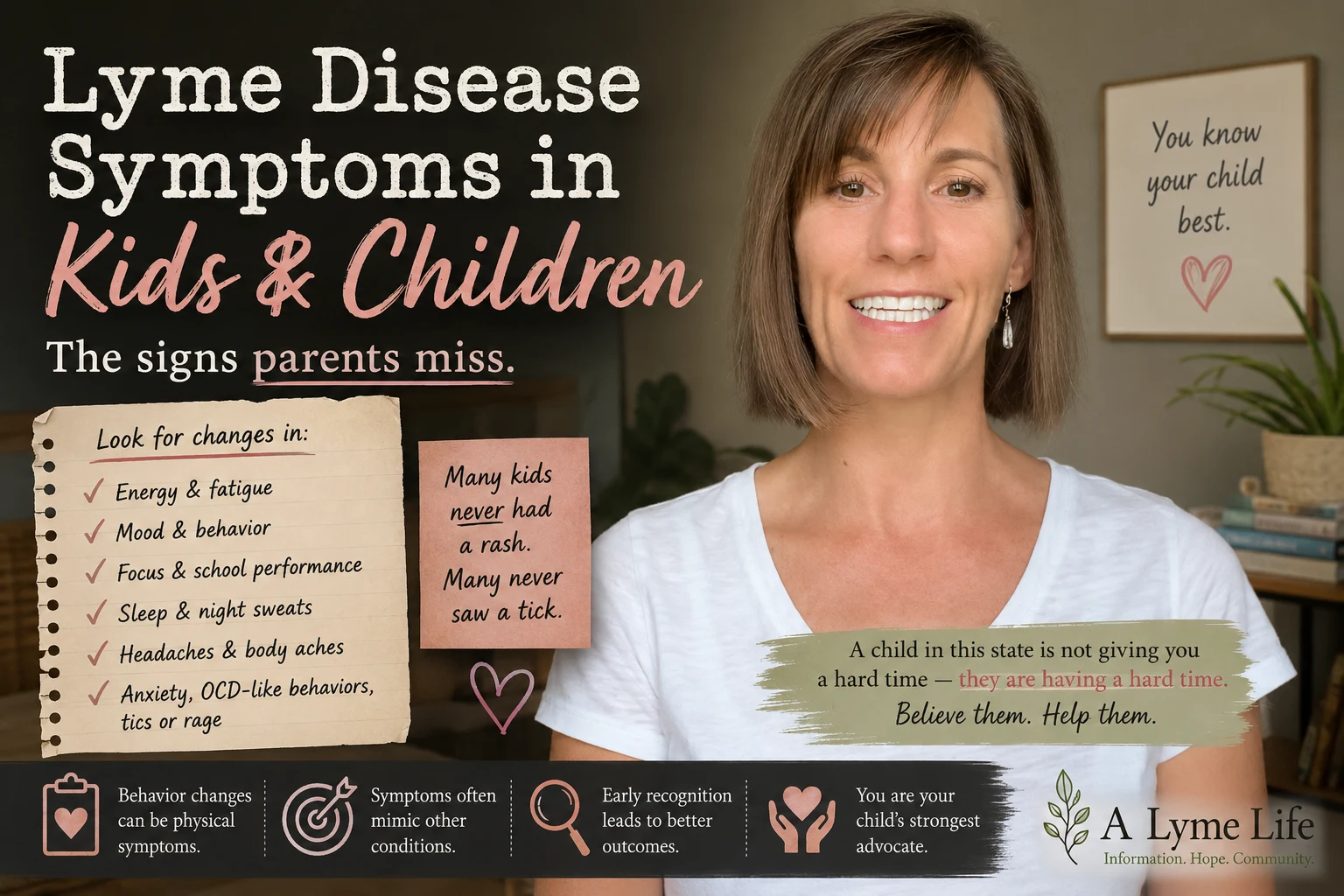
The single most important clue is how fast it came on. Typical childhood development ebbs and flows; PANS/PANDAS tends to arrive like a switch was flipped. Commonly reported signs:
- Sudden, severe OCD or obsessive fears
- Tics (motor or vocal)
- Extreme anxiety & separation anxiety
- Rage & emotional meltdowns
- Regression to younger behavior
- Handwriting suddenly deteriorates
- Sharp drop in school performance
- Food restriction or refusal to eat
- Sensory sensitivities
- Sleep disruption & night terrors
- Urinary frequency or bedwetting
- Depression or mood swings
It's the abruptness and severity — a good week, then a cliff — that separates this from ordinary ups and downs.
The Lyme & Bartonella connection
Ticks don't check IDs — children get bitten too, often more than adults, because of how they play. When a tick-borne infection takes hold in a child, it can drive exactly this kind of neuropsychiatric picture. Bartonella comes up over and over in these conversations, because it's so strongly associated with rage, anxiety, and sudden behavioral change. Lyme and Mycoplasma are in the mix too.
This is why a PANS work-up shouldn't stop at strep. If your child fits the picture, the underlying trigger may be a tick-borne infection that a standard pediatric visit would never think to look for — which makes understanding the whole co-infection picture so important.
Why it's so often missed
Here's the heartbreak, and why so many families lose years: the symptoms look psychiatric. So a child gets labeled with primary OCD, anxiety, bipolar disorder, ODD, or autism — and medicated for those — while no one looks for the infection underneath. Add to that:
- Many clinicians are still unfamiliar with PANS/PANDAS entirely.
- Tick-borne infections are notoriously hard to test for, so they're easy to overlook.
- Parents who insist "he changed overnight" are too often dismissed instead of heard.
Treating the psychiatric surface without addressing the biological driver is like bailing a boat without patching the hole. Sometimes it helps a little. It rarely fixes it.
How it's diagnosed
PANS/PANDAS is a clinical diagnosis — there's no single blood test that says "yes." A knowledgeable clinician looks for the characteristic abrupt onset plus the specific symptom clusters (OCD or food restriction alongside other neuropsychiatric features), and then investigates possible triggers — strep, but also Lyme, Bartonella, Mycoplasma, and viruses. The child's timeline is central evidence, which is exactly why a parent's careful account of "when it started and how fast" matters so much. Keeping a dated log of changes can genuinely help.
The three-pronged approach to treatment
Specialists generally describe treatment as three pillars, worked at the same time:
Treat the underlying infection
Whatever set it off — strep, Lyme, Bartonella, Mycoplasma — has to be addressed. This is the root, and it's the piece most often skipped when a child is handed only a psychiatric label. Getting the infection identified and treated by someone who knows tick-borne illness is foundational.
Calm the immune & inflammatory response
Because the damage is driven by an immune reaction reaching the brain, quieting that response is often part of care. Depending on severity and under specialist supervision, this can range from anti-inflammatories to steroids to IVIG (intravenous immunoglobulin) in more significant cases. This is very much a doctor-directed piece.
Support the child psychiatrically & behaviorally
While the biology is being addressed, kids still need support to cope — CBT for OCD, therapy, school accommodations, and a lot of family steadiness. This isn't "instead of" treating the infection; it's alongside it, to help the whole child and the whole family survive the hard stretch.
A word for the parent in the fire
If you're living this, I know today was probably brutal, and I know how lonely it is to fight for a child while people imply you're overreacting. So let me say the thing you may need to hear: you know your child. You noticed the change because you are the world's foremost expert on who your kid actually is. That instinct is data, not drama.
Here's the honest bottom line I'd give a friend: a child who changes overnight deserves someone who will look for why — not just sedate the symptoms. PANS and PANDAS are real, tick-borne infections can be the trigger, and children do get better when the right cause is found and treated. Keep advocating. Find the clinicians who take the timeline seriously. You are not crazy, and your child is still in there.
Fighting for your child and don't know where to turn? Let's talk — free →
PANS, PANDAS & Lyme FAQ
PANDAS is tied specifically to strep, but PANS can be triggered by many infections — and Lyme, Bartonella, and Mycoplasma are recognized triggers. The infection provokes an immune response that affects the brain, producing sudden neuropsychiatric symptoms. Bartonella especially is linked to rage and behavioral change in children.
A dramatic, almost overnight onset in a previously well child: sudden severe OCD, tics, extreme anxiety, rage, regression, deteriorating handwriting, food refusal, sensory issues, sleep disruption, and urinary frequency. The suddenness and severity are what set it apart.
Because it looks psychiatric, kids get labeled with primary OCD, anxiety, bipolar, ODD, or autism and medicated — without anyone finding the infection underneath. Many clinicians don't know PANS/PANDAS, tick-borne infections are hard to test for, and parents are too often disbelieved.
A three-pronged approach: treat the underlying infection (Lyme, Bartonella, strep), calm the immune/inflammatory response (anti-inflammatories, steroids, or IVIG in severe cases, under specialist care), and support the child psychiatrically and behaviorally (CBT, therapy, family support). Guided by PANS-literate clinicians; outcomes vary.
Yes. A sudden, dramatic change is meaningful information. Parents usually notice first and are often right that something physical happened. Seek a clinician familiar with PANS/PANDAS and tick-borne illness who will take the timeline seriously and look for a cause — not just treat the surface symptoms.
References & further reading
- Columbia University Irving Medical Center — Lyme & Tick-Borne Diseases Research Center. columbia-lyme.org
- MedlinePlus (U.S. National Library of Medicine, NIH) — Lyme Disease. medlineplus.gov
- International Lyme and Associated Diseases Society (ILADS) — evidence-based guidelines and research. ilads.org
- Centers for Disease Control and Prevention (CDC) — Lyme Disease. cdc.gov/lyme
Medical disclaimer: This article is for educational purposes only and reflects personal experience and general information. It is not medical advice, diagnosis, or treatment, and it does not replace consultation with qualified healthcare professionals experienced in PANS/PANDAS and tick-borne illness. Pediatric neuropsychiatric conditions require professional evaluation and care. If your child is in crisis, seek emergency help. Christina Carter is a patient advocate and educator, not a licensed medical provider. Always consult qualified clinicians about your child's care.