Lyme Disease Symptoms: Early Signs, the Rash & the Ones People Miss
Lyme is called "the great imitator" for a reason — it can look like a hundred other things, which is exactly how it stole a decade from me. Here's a clear guide to the symptoms: early, late, and the unusual ones that so often get dismissed.
If you're here, you're probably trying to figure out whether what you (or someone you love) are feeling could be Lyme. I know that search intimately — I did it for years while doctor after doctor shrugged. So let me give you the honest, human version of Lyme's symptoms, without the medical jargon.
One thing to hold onto as you read: Lyme is wildly variable. Two people can have completely different symptoms — and Lyme symptoms in children — and in women — can look different again. That's part of what makes it so hard to catch — and why trusting your own sense that "something is wrong" matters so much.
Quick answer
What are the early symptoms of Lyme disease?
Early Lyme disease symptoms often appear days to weeks after a tick bite and can include a rash (sometimes the classic bullseye pattern), flu-like symptoms such as fever, chills, fatigue, headache, muscle and joint aches, and swollen lymph nodes. Not everyone gets a rash or remembers a tick bite. Because early symptoms mimic other illnesses, Lyme is frequently missed, so it is important to seek evaluation if you have possible exposure and symptoms.
Key Takeaways
- Lyme is “the great imitator” — it can look like a hundred other conditions.
- The bullseye rash is a myth as a requirement — most people never get one, and its absence proves nothing.
- Symptoms change by stage — early flu-like signs, then joint, nerve, and cognitive involvement.
- The “weird” symptoms are the ones most often dismissed — migrating pain, air hunger, sensory oddities.
- If this sounds like you, get proper testing and a Lyme-literate opinion.
Early symptoms & the rash
Early Lyme (the first days to weeks after a bite) often looks like a bad flu that came out of nowhere. Common early signs:
- A rash — sometimes the classic bullseye
- Fever and chills
- Fatigue
- Headache
- Muscle and joint aches
- Swollen lymph nodes
- Neck stiffness
- A general "unwell" feeling
Symptoms commonly begin about 3 to 30 days after a bite — but not always, and many people never recall a tick or bite at all.
The bullseye rash myth (this one matters)
If you do get the classic erythema migrans rash — an expanding red patch, sometimes with a clearer center like a target — it's a strong sign and worth acting on fast. But its absence proves nothing.
Later & chronic symptoms
When Lyme isn't caught early, it can settle in and spread, producing symptoms that are more debilitating and harder to connect back to a tick. These are the symptoms of chronic and late-stage Lyme:
- Severe, unrelenting fatigue
- Migrating joint pain & arthritis
- Brain fog & memory trouble
- Nerve pain, tingling, numbness
- Heart palpitations (Lyme carditis)
- Sleep disturbance
- Mood changes, anxiety, depression
- Widespread, unexplained pain
The unusual symptoms people (and doctors) miss
This is where Lyme earns its reputation — and where so many people get dismissed. These are the unusual symptoms of Lyme that are easy to blame on something else:
- Neurological Lyme — facial palsy (drooping on one side), shooting nerve pains, tingling, and cognitive changes. I wrote a whole guide on neurological Lyme disease.
- Lyme carditis — Lyme can affect the heart, causing palpitations, a racing or irregular heartbeat, dizziness, or fainting. This one can be serious and needs prompt medical attention — it's the main reason Lyme can, rarely, be life-threatening (can Lyme disease kill you?).
- Psychiatric symptoms — new or worsening anxiety, depression, irritability, even rage — sometimes driven by Lyme or a co-infection like Bartonella.
- Air hunger & night sweats — often a clue to the co-infection Babesia rather than Lyme itself.
- "Invisible" fatigue and pain that every test calls normal — the story of so many people who are told it's all in their head.
How Lyme symptoms change by stage
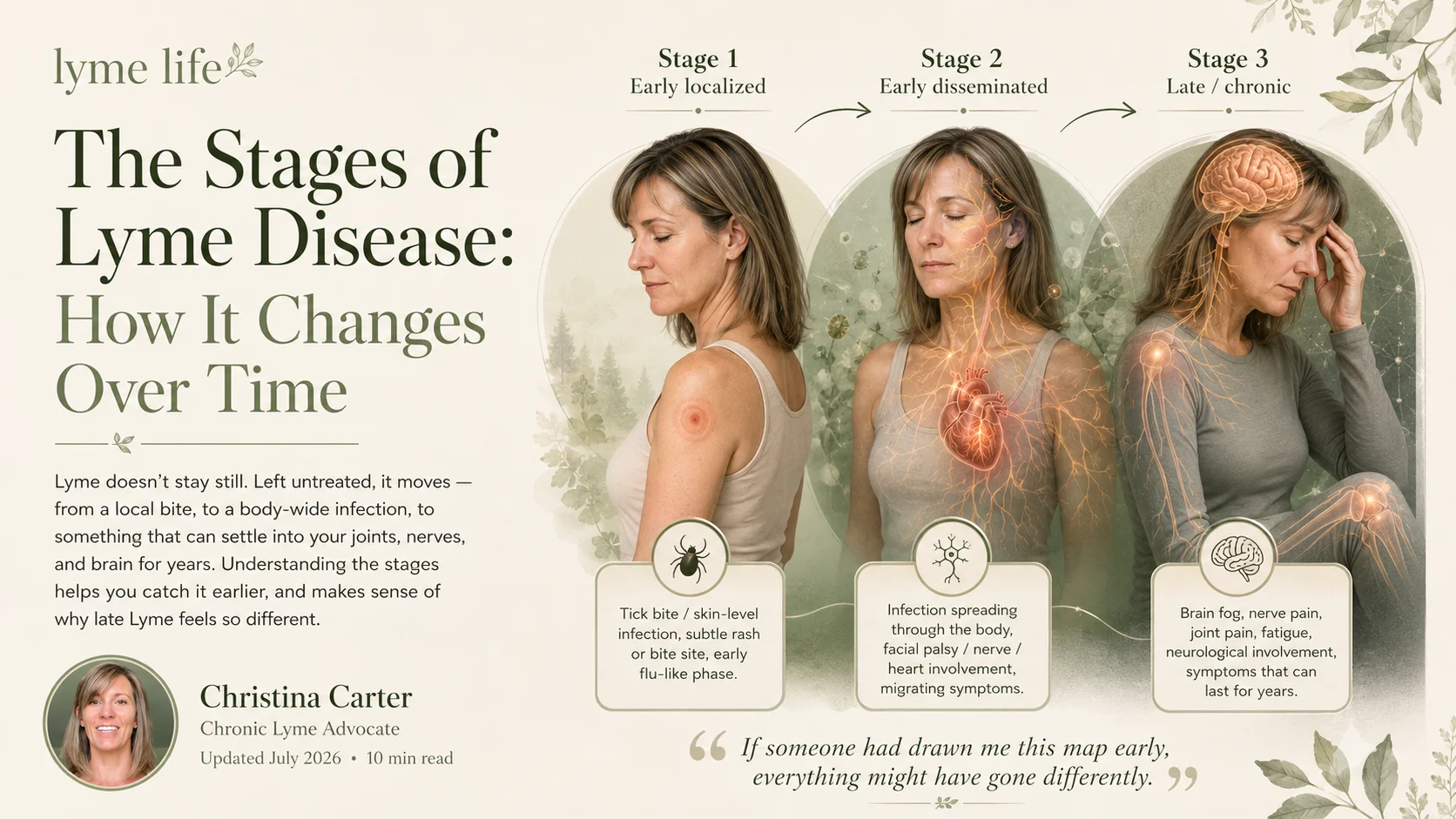
Lyme moves in phases; for the full breakdown see my guide to the stages of Lyme disease.
Days to weeks after the bite
- Rash (maybe), flu-like symptoms, fatigue, aches. This is the best time to catch and treat it.
Weeks to months
- The infection spreads: multiple rashes, neurological symptoms (like facial palsy), heart involvement, more joint pain.
Months to years
- Persistent arthritis, neurological and cognitive problems, profound fatigue — often tangled up with co-infections and immune dysregulation.
Why Lyme is called "the great imitator"
Because its symptoms overlap with so many other conditions, Lyme is frequently misdiagnosed as fibromyalgia, chronic fatigue syndrome, MS, rheumatoid arthritis, depression, anxiety, or "just stress." I collected a decade of those labels. If you've been handed a diagnosis that never quite fit — or told your tests are normal while you feel anything but — you're not alone, and you're not imagining it. My own misdiagnosis story may sound familiar.
What to do if this sounds like you
If you're nodding along to too much of this page, here's a calm next step: don't panic, and don't self-diagnose from the internet — but do take it seriously. Learn how Lyme testing actually works (and why standard tests miss so much), and find a clinician who takes tick-borne illness seriously. And if you're overwhelmed and don't know where to begin, that's exactly what I'm here for.
Lyme Symptoms FAQ
Often days to weeks after a bite: a rash (sometimes the bullseye), plus flu-like symptoms — fever, chills, fatigue, headache, muscle and joint aches, swollen lymph nodes. Not everyone gets a rash or recalls a bite. Because early symptoms mimic other illnesses, Lyme is often missed, so seek evaluation if you have possible exposure and symptoms.
No. Many people never develop the bullseye (erythema migrans) rash, or never notice it. Its absence does not rule out Lyme — relying on the rash alone causes many cases to be missed, and is a major reason Lyme is diagnosed late.
Beyond the well-known signs: neurological symptoms (nerve pain, tingling, facial palsy), cognitive problems and brain fog, heart symptoms like palpitations, psychiatric symptoms like anxiety and depression, and unexplained widespread pain and fatigue. This variety is why Lyme is called a great imitator.
When Lyme isn't caught early, it can cause severe fatigue, migrating joint pain and arthritis, neurological problems, cognitive difficulty, sleep disturbance, and mood changes. These are often compounded by co-infections and immune dysregulation, so comprehensive, individualized care is usually needed.
Commonly within about 3 to 30 days, though timing varies. A rash, if it appears, often shows up in this window; other symptoms may develop over days to weeks. Some people don't notice symptoms until later, part of why Lyme is sometimes caught at a more advanced stage. Seek evaluation if symptoms follow possible tick exposure.
References & further reading
- Centers for Disease Control and Prevention (CDC) — Lyme Disease. cdc.gov/lyme
- International Lyme and Associated Diseases Society (ILADS) — evidence-based guidelines and research. ilads.org
- Johns Hopkins Lyme Disease Research Center. hopkinslyme.org
Medical disclaimer: This article is for educational purposes only and reflects personal experience and general information. It is not medical advice, diagnosis, or treatment, and it does not replace consultation with a qualified healthcare professional. Symptoms described here overlap with many conditions and are not a basis for self-diagnosis; some, such as heart-related symptoms, can be serious and require prompt medical care. Christina Carter is a patient advocate and educator, not a licensed medical provider. Always consult a qualified clinician for diagnosis and treatment.