Best Supplements for Lyme Disease: What Actually Helps (and What's a Waste)
If you've priced out a "Lyme supplement protocol," you've probably had the same reaction I did: sticker shock, then confusion. So let me cut through it — here's what actually supported my family's recovery, what I'd be skeptical of, and the one thing no bottle on the shelf can do for you.
Let me say the quiet part out loud first, because nobody selling supplements will: no pill in a bottle cured my Lyme. Not one. What got my family to the other side was real treatment. But supplements absolutely mattered along the way — they helped my body detox, calm down, and rebuild — and choosing the right ones (instead of the whole overwhelming, wildly expensive shelf) made a genuine difference.
So this isn't a listicle with buy-buttons. I'm not an affiliate for anything here, and I've deliberately kept brand names out of it. This is the honest version: how to think about Lyme supplements, the categories that tend to earn their place, the ones I'd be skeptical of, and how to spend your money where it actually counts.
Quick answer
What are the best supplements for Lyme disease?
There is no universal supplement stack for Lyme, but the ones most commonly used to support recovery target detox, inflammation, mitochondria, and the gut. These often include glutathione or its precursor NAC, magnesium, vitamin D, omega-3s, B vitamins, CoQ10, curcumin, and probiotics — plus binders during die-off. Supplements support the body during treatment; they do not kill Borrelia on their own or replace a real treatment plan. Choices should be individualized with a knowledgeable clinician. This is not medical advice.
Key Takeaways
- No supplement cures Lyme. They support the body — detox, inflammation, mitochondria, gut — alongside real treatment.
- The workhorses cluster into a few categories: detox support, anti-inflammatory, mitochondrial/energy, gut, and antimicrobial herbs.
- Price ≠ effectiveness. Third-party testing, correct form and dose, and fit to your situation matter far more than a premium label.
- Timing matters. What helps during die-off differs from what helps in the rebuilding phase.
- Individualize with a clinician. Binders and some herbs affect how your medications absorb.
The uncomfortable truth about "Lyme supplements"
The Lyme world is a marketing goldmine, and vulnerable, exhausted people are the target. You'll find proprietary blends that cost a fortune, "protocols" that just happen to require the seller's own product line, and influencers with affiliate links insisting this is the thing that finally worked. I understand the desperation that makes those pitches land — I've felt it. When you're that sick, you'll try almost anything.
Here's the reframe that saved me money and sanity: supplements are supportive infrastructure, not the treatment. They help your body do the work of detoxing, lowering inflammation, and repairing — so that whatever actual treatment you're doing lands on a body that can use it. That's a real, worthwhile role. It's just not the miracle-in-a-bottle role they're marketed as.
The 5 categories that earn their place
Rather than memorize a giant list, it helps to think in categories. Almost everything genuinely useful falls into one of these five, and understanding the "why" lets you and your clinician build something that fits you.
1. Detox support. When you're killing off bacteria — with any treatment — the die-off releases toxins that can make you feel worse (the Herxheimer reaction). Glutathione (or its precursor NAC), milk thistle for the liver, and binders like activated charcoal or chlorella are the usual players. This category is often the difference between a tolerable week and a miserable one — see detox support for the bigger picture.
2. Anti-inflammatory. So much of chronic Lyme suffering is inflammation. Omega-3 fish oil, curcumin (from turmeric), and resveratrol show up here. They won't kill Borrelia, but they can take the edge off the pain, swelling, and brain fog that make daily life so hard.
3. Mitochondrial & energy support. Lyme drains your cellular batteries, which is why the fatigue is so bone-deep. CoQ10, magnesium, B-complex vitamins, and D-ribose are aimed at helping your cells make energy again. Magnesium in particular is one most people are low on, and it does double duty for muscle pain and sleep.
4. Gut & immune foundation. Roughly 70% of your immune system lives in your gut, and long antibiotic rounds wreck it. Quality probiotics, vitamin D (get your level tested — many of us run low), and zinc support the foundation everything else is built on.
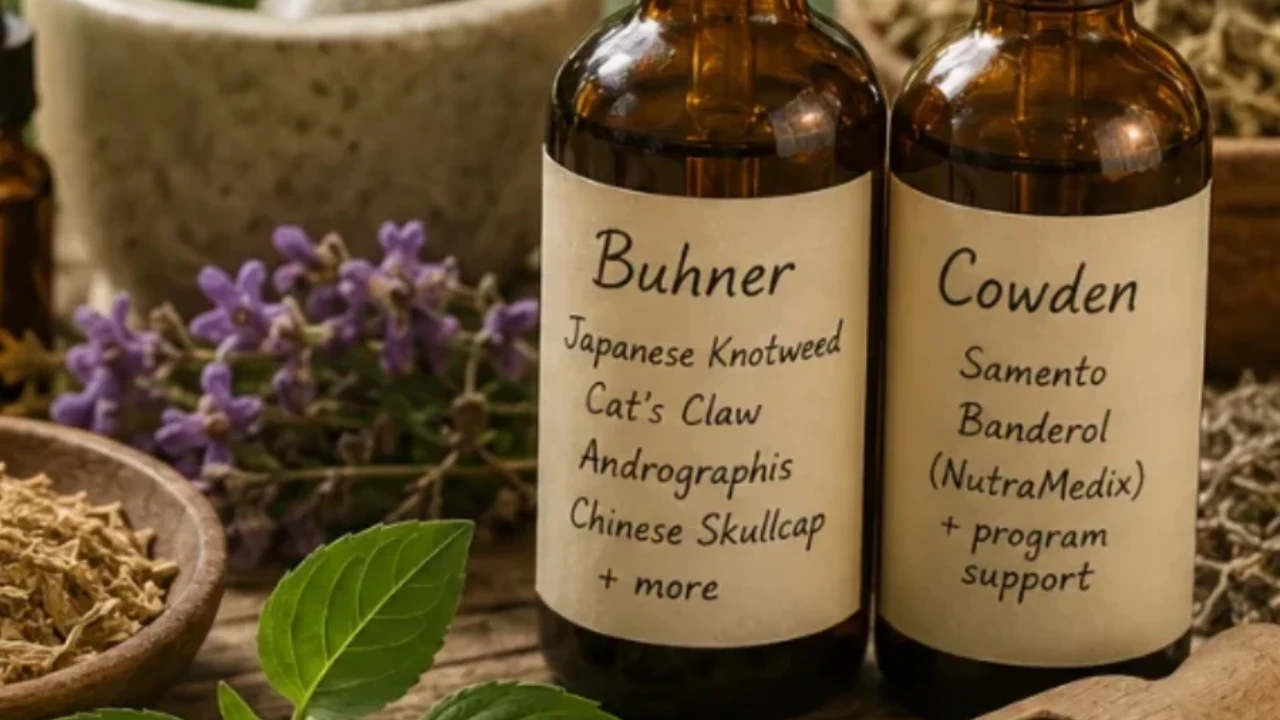
5. Antimicrobial herbs. This is the one category with genuine anti-Borrelia interest behind it. Herbs like Japanese knotweed, cat's claw, and others anchor well-known herbal approaches — I go deep on these in herbal protocols for Lyme and natural remedies. These are powerful and belong in a structured plan, not casual self-dosing.
Quick-reference: common supplements & why
A snapshot of what tends to show up in thoughtful Lyme support and the role each plays. This is orientation, not a prescription — doses and fit belong with your clinician.
| Supplement | Category | Why it's used |
|---|---|---|
| Glutathione / NAC | Detox | Master antioxidant; supports liver detox and eases die-off |
| Magnesium | Energy / calm | Muscle pain, sleep, cellular energy; most people run low |
| Vitamin D3 | Immune | Immune regulation; test your level first, many are deficient |
| Omega-3 (fish oil) | Anti-inflammatory | Lowers systemic inflammation; supports brain and joints |
| Curcumin | Anti-inflammatory | Pain, swelling, and brain-fog support |
| CoQ10 | Mitochondrial | Cellular energy production; targets deep fatigue |
| B-complex | Energy | Nervous system and energy metabolism support |
| Probiotics | Gut | Rebuilds gut flora, especially after antibiotics |
| Binders (charcoal, chlorella) | Detox | Bind and carry toxins out during die-off |
| Antimicrobial herbs | Antimicrobial | Anti-Borrelia interest; use within a structured protocol |
What I'd be skeptical of
I won't name products, but I'll name patterns. Be wary when you see:
- "Cures Lyme" claims. Nothing sold as a supplement has earned that. It's a marketing red flag, not a promise.
- Proprietary blends that hide doses. If the label won't tell you how much of each ingredient you're getting, you can't judge whether it's a real dose or fairy dust.
- Protocols that conveniently require the seller's whole product line. Sometimes legitimate — often a funnel.
- Mega-expensive versions of cheap, generic nutrients. A premium magnesium is still magnesium.
- Anything pushed hard by an affiliate. Enthusiasm plus a commission link deserves a skeptical second look.
How to buy smart (and not get fleeced)
When a supplement genuinely fits your plan, spend on quality — but "quality" has a specific meaning:
- Third-party tested. Look for independent testing (e.g., NSF, USP, or a published certificate of analysis) for purity and potency.
- The right form. Forms matter — chelated magnesium vs. cheap oxide, methylated B vitamins for some people, liposomal or acetyl forms of glutathione. Your clinician can steer this.
- Clean labels. Fewer fillers, dyes, and mystery "proprietary blends."
- Reputable manufacturing. Professional/practitioner lines are often held to tighter standards than bargain-bin brands.
- Buy a few things well. A focused handful of quality supplements beats a cabinet full of everything.
Timing: die-off vs. rebuilding
One thing that took me too long to understand: the same person needs different support at different stages. During active treatment and die-off, the emphasis leans toward detox and drainage support — helping your body carry out what treatment is killing. As you move into the rebuilding phase, the emphasis shifts toward mitochondria, gut repair, and rebuilding what illness (and antibiotics) depleted.
This is also why blindly copying someone else's stack rarely works. Their body, their stage, their co-infections, and their treatment aren't yours. If you want the bigger recovery arc this fits into, my recovery timeline lays out how these phases actually unfolded for me.
What to ask your clinician
Print this and bring it to your appointment:
- "Given my treatment and stage, which supplements are actually worth it for me right now?"
- "Do any of these interact with my medications or with each other?" (Binders and some herbs are notorious for this.)
- "Should I test my vitamin D, magnesium, or other levels before supplementing?"
- "What forms and doses do you recommend, and for how long?"
- "What should I add during die-off, and what should I shift to as I rebuild?"
If you're earlier in the journey, it helps to understand what you're actually treating first — start with Lyme symptoms, then antibiotics for Lyme and treating Lyme without endless antibiotics to see where supplements fit into the whole picture.
And if you're staring at a giant, overwhelming, expensive protocol someone handed you and you don't know what's worth it — that's exactly the kind of thing I help people sort through.
Lyme Supplements FAQ
There's no universal stack, but the most commonly used supplements target detox, inflammation, mitochondria, and the gut — often glutathione/NAC, magnesium, vitamin D, omega-3s, B vitamins, CoQ10, curcumin, and probiotics, plus binders during die-off. Supplements support the body during treatment; they don't kill Borrelia on their own or replace a real plan. Choices should be individualized with a knowledgeable clinician. Not medical advice.
No. No supplement is a proven cure for Lyme. Some herbs and nutrients have antimicrobial or supportive properties and can be a meaningful part of a broader plan, but framing any supplement as a standalone cure is misleading. Think of supplements as support — helping the body detox, reduce inflammation, and rebuild — alongside appropriate treatment guided by a clinician. Not medical advice.
Support for detox and die-off commonly centers on glutathione or NAC for the liver, binders such as activated charcoal or chlorella to help carry toxins out, plenty of water and electrolytes, and gentle liver support like milk thistle. These don't eliminate a Herx but may make it more tolerable. Introduce anything new slowly and under guidance — binders can affect the absorption of medications and other supplements. Not medical advice.
Not necessarily. Price doesn't equal effectiveness, and the Lyme world is full of costly proprietary blends and affiliate-driven products that promise more than the evidence supports. Third-party quality testing, correct forms and doses, and fit to your situation matter more. Spending strategically on a few well-chosen products usually beats an expensive shelf of everything. Not medical advice.
That's a decision to make with a clinician, not from a website. Some people use herbal and nutritional protocols as a central strategy, others combine them with antibiotics or other treatments, and the right approach depends on your history and stage. What isn't wise is quietly abandoning a treatment plan for supplements alone without medical input. Supplements are most powerful as part of a coordinated plan. Not medical advice.
References & further reading
- Centers for Disease Control and Prevention (CDC) — Lyme Disease. cdc.gov/lyme
- International Lyme and Associated Diseases Society (ILADS) — evidence-based guidelines and research. ilads.org
- MedlinePlus (U.S. National Library of Medicine, NIH) — Lyme Disease. medlineplus.gov
- National Center for Complementary and Integrative Health (NCCIH) — Dietary & Herbal Supplements. nccih.nih.gov
Medical disclaimer: This article is for educational purposes only and reflects personal experience and general information. It is not medical advice, diagnosis, or treatment, and it does not replace consultation with a qualified healthcare professional. Supplements can interact with medications and are not risk-free; do not start, stop, or combine supplements without professional guidance. Christina Carter is a patient advocate and educator, not a licensed medical provider. Individual results vary. Always consult a qualified clinician.